Showing posts with label BrahMos. Show all posts

April 5, 2015

Chinese Type 093A or 093G SSN armed with YJ-18 Carrier Killer Missiles

What may be 3 Chinese Type 093A/093G SSN or SSGN submarines. An obviously blurry photo of a clarity far below military satellite standards. Nothing as clear as "reading a car's number plate". 
---
What may be a Chinese 093A/093G SSN or SSGN submarine with a vertical launch system with two types of missile [?] and pump jet propulsion.
---
Probably one of China's older model Type 093 "Shang" class SSNs.
---
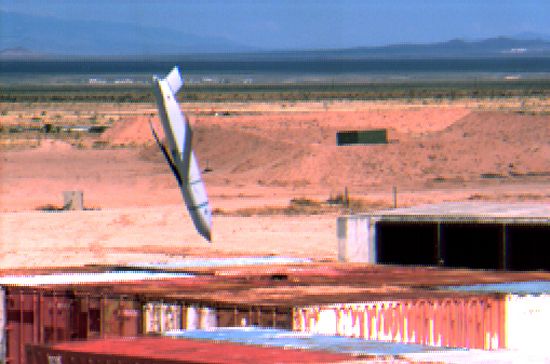
Depiction of a Klub-Sizzler submarine launched missile which may be similar to China's YJ-18 anti-ship missile.
---

Ecns of China reported April 3, 2015 a new version of China's Type 093 (NATO "Shang class") SSN. The new version is variously named Type 093A or 093G. The ability of 093A/093G to mount vertically launched YJ-18 anti-ship missiles may cause the 093A/093G to be called an SSGN. There  seem to be no reliable photos of the YJ-18.

If the longer length and other differences of the Type 093A/093Gs are accurate it is possible China may eventually rename them Type 095s. The 095 is expected to feature unobservable features including an advanced reactor, lower acoustic signature and the visible VLS tubes (with VLS noted on the 093As/093Gs).

Just a note of caution that the 093A/093G reports seem to rely on 3rd or 4th hand Taiwanese sources in the information loop. The message that 093A/093Gs with their missiles are "carrier killers" of course worries the US. A message that directs more US military attention weapons-money-opportunities to Taiwan is beneficial to Taiwan. Taiwan definitly needs US help to pressure some country to help Taiwan build or acquire four new submarines.

Application of the term "carrier killer" to the YJ-18 should not imply that the YJ-18 is a new threat. There may be many similarities between the 093A/093G's YJ-18 anti-ship missile and the BrahMosYakhont or Klub-Sizzler. Significantly the Klub-Sizzler has already been fitted by Russia to China's 12 Russian built Kilo class submarines. Now China is taking the evolutionary (no game-changing) step of fitting Klub equivalents (YJ-18s) to faster moving and longer submerged Type 093A/093Gs.

All this missile activity is not a major departure from conventional and nuclear propelled submarines pre-existing torpedos capabilities - with torpedos being able to "kill"/destroy carriers and other major warships.

The YJ-18 may also owe some design attributes to the YJ-12 "a supersonic Chinese anti-ship missile developed in the 1990s".

Comment - while the YJ-18 sounds like an awesome weapon the hierarchical autonomy, tactics and efficiency of their human operators are very important. The human element is often mistakenly disregarded. How smoothly the YJ-18s fit into China's broader network of anti-shipping sensors is also a consideration.

The report from Ecns of China, April 3, 2015 has the string http://www.ecns.cn/military/2015/04-03/160484.shtml and is below  .

[Chinese PLA] "Navy to get 3 new nuclear subs

   
2015-04-03 09:07China DailyEditor: Si Huan
Three cutting-edge nuclear-powered attack submarines have been manufactured and will soon be commissioned by the Chinese navy, according to media reports.

China Central Television showed a satellite picture earlier this week of three submarines anchored at an unidentified port [see first picture above - very blurry], saying the vessels are China's most advanced Type-093G nuclear-powered attack submarines, just completed by a Chinese shipyard and a waiting delivery.

With a teardrop hull, the submarine is longer than its predecessor, the Type-093, and has a vertical launching system, the report said.

Another article carried by the People's Liberation Army navy's website said the Type-093G's wing-shaped cross-section [?] is designed to improve speed and mobility as well as reduce noise, and that the vertical launcher is capable of delivering the country's latest YJ-18 supersonic anti-ship missile.

China established its nuclear-powered submarine force in the early 1970s but had never shown it to the outside world until 2009, when two nuclear submarines took part in a parade marking the 60th anniversary of the PLA navy's founding.

The Type-093G is reported to be an upgraded version of Type-093, China's second-generation nuclear-powered attack submarine, which entered active service several years ago.

Cui Yiliang, editor-in-chief of Modern Ships magazine, said: "Though China was comparatively late in developing advanced nuclear-powered submarines such as the Type-093G, we used a lot of the most cutting-edge technologies and equipment on our submarines, enabling them to compete with their foreign counterparts."

He noted that China has researched the vertical launching system for many years and has installed it on other submarines and surface ships.

"Judging from the vessel's design, the Type-093G should have strong anti-ship and counter-submarine capabilities," said Yin Zhuo, a senior expert with the navy. "It is also likely to be upgraded with the capability of striking land targets with cruise missiles in the near future."

He added that the navy has formed a reliable logistics system for its nuclear submarine fleet.
Liu Jiangping, a naval equipment expert in Beijing who had served in the PLA navy for decades, said the vessel's vertical launching system enables the submarine to launch long-distance strikes from underwater, increasing the vessel's survivability in war.

The strategic force of the PLA navy now has about four nuclear-powered Type-094 ballistic missile submarines, up to six Type-093 nuclear-powered attack submarines and about three old Type-091 nuclear-powered attack submarines, CCTV quoted foreign media reports as saying.[note the report of six 093's may be Taiwanese deception. Wikipedia (see its sidebar) based on US DoD reports reported only 2 active 093s in June 2014. Wikipedia's sidebar agrees there are 3 active 091s however ].  
---

Another report, from Deagel.com, last updated February 4, 2015, goes into much more detail on the YJ-18 anti-ship missile. The similarity to BrahMosYakhont or Klub-Sizzler in function is obvious. The report's string is http://www.deagel.com/Anti-Ship-Missiles/YJ-18_a002884001.aspx :

"YJ-18 [Missile]


Description:

The YingJi-18 (YJ-18 or Eagle/Hawk-18) is a vertically-launched, long-range, supersonic, sea-skimming anti-ship missile designed by China to kill US Navy's Aegis-equipped destroyers or its equivalents provided to Japan, South Korea or European Navies. The YJ-18 is planned for deployment by the newest People's Liberation Army Navy (PLAN) Type 052D class destroyers and subsequently may be incorporated into existing destroyers and submarines as part of a modernization effort. Its guidance system consists of an advanced inertial navigation, maybe backed by the Beidou Chinese GPS, plus an active radar seeker in the terminal phase. Besides, a built-in data link allows the carrier ship to update the target's location. The Aegis-killer missile existence was first reported in 2013 with an entry into service expected by 2014 or later.

The YJ-18 missile is equipped with a 300 kg high explosive (HE) warhead capable of taking out a destroyer-sized ship. The HE warhead can be replaced by an anti-radiation/electromagnetic pulse warhead that is said can take down up to 60 percent of the enemy ship's electronic systems at a range of 50 meters after detonating. After the vertical launch the missile's turbojet engine is capable of flying at a cruise speed of Mach 0.8 for about 180 kilometers after that point the warhead section separates and a solid rocket engine ignites allowing at a top speed of Mach 2.5-3 for about 40 kilometers. The missile can maneuver at 10G acceleration to avoid enemy interception by air-to-air or surface-air missiles. The missile design and performance is very similar to Russia's 3M54E [Klub-Sizzlerwhich may have been the template for the YJ-18."

Pete

March 31, 2015

Israeli Publicity on Nuclear Capability of its Dolphin 2 Submarines - Yakhont, BrahMos


The upper image is a Dolphin 2 - for size comparison and to indicate the fuel cell AIP additions. Lower submarine image highlights the high number of torpedo/missile tubes - apparently ten on the Dolphin 1s and 2s - useful for rapid nuclear missile launch. (Diagram courtesy Next Navy)
---
Most probably very similar to the Russian-made P-800 Oniks, Yakhont , NATO reporting name SS-N-26 "Strobile" is the Russian-Indian BrahMos (above) . The mach 2.8 end run makes Yakhont and BrahMos difficult to detect and shoot down in time. With a probable land attack capability and air-launched range longer than the notional 290km they will be a proliferating weapon to watch. (Diagram courtesy - Russian for "Military Parity" website).
---

Here's the BrahMos missile showing its capabilities in land, ship and submarine launch. Its ability to hit what look like 2-4 m targets supports claims of +2/-2 m accuracy.
---

In terms of relevance to Australia the ability of Germany's TKMS-HDW to tailor-make largish Dolphin 2 (2,000+ ton (surfaced)) warm water, submarines for Israel implies a capability to successfully tailor-make future submarines for Australia.

In late March 2015 much of the Israeli media (eg. a haaretz article of March 30, 2015) seem to be carrying Israeli government generated news of technical progress with the ISS Tanin nuclear capable submarine. Tanin appears to be the most complete of Israel's Dolphin 2 class SSKs. It does not appear the Tanin is anywhere near formal commissioning - so why the publicity? 

The media reports substantially carry mention of the nuclear second strike capabilities of the Dolphins. This is a subject that requires Israeli Government permission to be published.

The reason to mention second strike appears to be Syrian government acquisition and possible deployment of Russian-made P-800 Yakhont, NATO reporting codename SS-N-26 "Strobile" - a supersonic cruise missiles. What has Israel worried is not so much the usual anti-shipping role but more the Yakhont's land attack capability. 

With Syria's record of using Sarin gas on crude warheads against civilians Israel's worry about the Oniks would be considerable. Syrian use of radiological warheads might also be feasible and of course high explosive. The chances of Sunni rebels or Sunni governments acquiring Yakhonts adds an extra worry. See my May 21, 2013 article on Israeli airstrikes on Syria.

Media stories on Israeli second strike would of course have a "put pressure on Iran" intent as well.

In an added twist India and Russia are jointly developing the BrahMos version of the Yakhont. India wishes to market BrahMos to several countries in the Asia-Pacific. Meanwhile Russia has already supplied the Yakhont in Australia's region to Indonesia and Vietnam

Please link with Submarine Matters' Israeli Dolphin Sub, Nuclear Armed, Conventionally Propelled, February 25, 2012 which mentions possible Israeli developed nuclear warheads on submarine launched Harpoon missiles (SLCMs). Israel's current nuclear SLCM may be the socalled Popeye Turbo or perhaps an Israeli version of the (jointly developed?) Indian K-15 small ballistic missile. The Dolphin 1s and 2's extraordinarily high number of ten torpedo tubes (including 4 unusually large 650mm tubes) implies the ability to rapidly launch ten nuclear land attack missiles. 

The sequence of the Dolphin 2s being delivered by Germany then modified/completed in Israel (Haifa) is a bit puzzling. Based on "Boats" but updated:

Dolphin 1 class
  • Dolphin – delivered May 1998 – commissioned 1999
  • Leviathan (trans. "Leviathan" or "whale") – delivered 1999 – commissioned 2000
  • Tekumah (trans. "Revival") – delivered 2000 – commissioned 2000
AIP Dolphin 2 class
  • Tanin (trans. "Tannin" or "Crocodile") – delivered 23 Sept 2014 - enter service 2015, commisioning 2015 or 2016?
  • Rahav (trans. "Splendour") – delivered 29 April 2013 - enter service in 2015 or 2016?
  • Name not assigned yet. Ordered 21 March 2012. Enter service in 2017 or 2018?

Tanin was apparently received months after Rahav yet Rahav will be completed later. 

Much of the Israeli modification/completion would be for the electronics and loading fitout for the nuclear missiles. Publicity about Germany in 2012 being overly knowledgable and helpful to Israel regarding the nuclear missile loading fitout must have resulted in Israel taking over that whole job. Perhaps Israel's procedures are not fully developed - hence the Tanin-Rahav completion anomaly.

Pete

March 11, 2013

Is the "black" RATTLRS missile an F-35 sales sweetener?

Artist's mockup of an F-35 firing a jet powered supersonic missile Revolutionary Approach To Time Critical Long Range Strike (RATTLRS)
-
It may well be that an operational missile derivative (now a "black" the US term for secret project) of the RATTLRS concept has been rolled into the sale of F-35 as a sweetener to encourage buyers for the problematic-underdeveloped F-35. Such a missile may be the secret weapon the F-35 sales team and USAF officers have been hinting at in the Australian press. 
 
The reference in the Australian press was in an Australia's ABC TV Four Corners "Reach for the sky" on February 18, 2013 http://www.abc.net.au/4corners/stories/2013/02/18/3690317.htm :

"[civilian presenter] ANDREW FOWLER: And it's even got a weapon that's a closely guarded secret.

USAF LT. GENERAL CHRIS BOGDAN, EXECUTIVE OFFICER, F-35 JOINT PROGRAM OFFICE: Those are the crown jewels of the program and that's what makes the F-35 special.

ANDREW FOWLER: So asserting that to the public, it's really saying 'trust us'?"
 
--------------------------------

RATTLRS Derivative More Likely Lockheed Martin's Secret Weapon

The US-UK Revolutionary Approach To Time Critical Long Range Strike (RATTLRS) appears to have gone "black" as it likely enters its practical-operational phase.

After some reconsideration - my February 28, 2013 post F-35 being sold with promise of a hypersonic missile? may be incorrect - as a hypersonic (Mach 5+) missile seems to involve too may technical problems to be used as a weapon in the next two decades. Hypersonic speed in the atmosphere:

- generates tremendous heat which within minutes melts available missile skin materials;
- heat adversely effects electronics;
-  and the large heat signature is unstealthy (showing up on infrared and other sensors while drawing in heat seeking SAMs or air to air missiles).

There are also range problems. The force needed to penetrate (or push aside) atmosphere at hypersonic velocity severely limits range. Two or more powerplants used to make hypersonic velocity possible involve prohibitive weigh increases which also limit range. The only way around these problems seems to be a weapon in the vacuum or "ether" of space - a role already performed by multistage ballistic missiles.

All this suggests high supersonic flight (up to Mach 4) is more appropriate for longer range, some stealth, while generating less material damaging heat. Also RATTLRS testing indicates turbo jets are capable of Mach speeds just below hypersonic.

Meanwhile it is unlikely that other missile developments mentioned in  F-35 being sold with promise of a hypersonic missile? are the "silver bullet" boosting F-35 sales. The West is unlikely to have built a missile similar to the BrahMos due to its rocket and ramjet's range limitations (officially around 300 kilometres). It is unknown to what extent the JASSM may have adopted RATTLRS technology (such as the jet engine) or whether JASSM may have in fact merged with RATTLRS.

In recognition of hypersonic heat and range problems the RATTLRS project has adopted an evolutionary approach - high supersonic speed (between Mach 3 and 4) using a single turbo-jet engine for simplicity and weight saving.


Popular Mechanics says about the RATTLRS YJ102R turbine engine "might be the most powerful turbojet on the planet—at least by weight. It’s barely bigger than two breadboxes."

Background

Rolls-Royce announced on January 12, 2009 that it had successfully completed an initial test of its advanced, high-specific thrust YJ102R engine at the Indianapolis, Indiana facility. This test is the first of a series to be performed by LibertyWorks (Rolls-Royce North American Technologies Inc) , the company's research unit, and is designed to validate critical performance criteria under its High Speed Turbine Engine Demonstration (HiSTED) contract with the US Air Force Research Laboratory (AFRL).
-
Janes provides details of the requirement and thinking behind super-hyper sonic missile systems.
"The US has been examining a range of very high-speed strike weapon concepts for a number of years. These weapons, both sea- and air-launched, have been drawn up for use against mobile and/or time-critical targets, along with hardened and buried targets. In all cases the weapons rely on the kinetic effects of a ramjet powerplant to attain the velocities needed to be effective against such target sets...The optimum penetration effect of a weapon in this class would be between 30 and 55 metres."

GlobalSecurity.org http://www.globalsecurity.org/military/systems/munitions/rattlrs.htm discusses performance requirements for RATTLRS including the jet turbine alone:

- boosting speed to Mach 3 to 4
- a range of up to 1,000 km
- can be air-launched by the F/A-18 E/F (Super Hornet), F-22 and F-35 (JSF)
- maximum missile weight of 1,800 lbs with a 500 lbs payload/warhead

Project Going "Black"

Increasing the likelihood that the F-35 builder Lockheed Martin has combined the sale with an operational RATTLRS missile development is:

GlobalSecurity.org http://www.globalsecurity.org/military/systems/munitions/rattlrs.htm :

 "On 01 February 2005 the Office of Naval Research awarded Lockheed Martin a phase two contract N00014-04-D-0068-0003 for $157,443,201 including options...Lockheed Martin is teamed with Allison Advanced Development Company [acquired by Rolls-Royce] to develop technologies that will provide an advanced Mach 4+ integrated propulsion system in an operationally traceable airframe. The YJ102R developmental engine...As of May 2009 plans called for completing the RATTLRS flight test program by the end of 2009. [as of early 2010 this flight seems not to have happened]"

Pete

February 28, 2013

F-35 being sold with promise of a hypersonic missile?


Also see my March 3, 2013 post http://gentleseas.blogspot.com.au/2013/03/has-black-rattlrs-missile-been-rolled.html on whether a RATTLERS derivative is, in fact, Lockheed Martin's "sweetener" for its F-35 sales.

Is an unpublisized missile being used as a major selling point for the F-35 Joint Strike Fighter (JSF)? With constant delays and cost overruns is Lockeed Martin attempting to entice potential F-35 buyers by combining the sale with a smaller derivative of the X-51? Is this smaller missile being advertized in confidential forums as a "game changer"? 

If the missile is a miniaturized derivative of the X-51 it would be a hypersonic, very advanced missile indeed. The smaller missile might be "paper" only or perhaps under US development and may not be mature until delivery of the F-35 to foreign customers from 2018-2020 onwards. Such a missile would need to be small enough to fit within the F-35's stealthy body. Hypersonic speed is generally considered Mach 5 or above.

---------------


A JASSM on display.
---


JASSM about to hit a steel reinforced concrete target. In this case the whole missile is in the end run. But it is also possible that the warhead could detach and be rocket propelled to higher Mach speeds shortly before it hits a target.
---
 
If the missile is less advanced and more publicized it may be a version of the stealthy, turbojet, cruise missile AGM-158 JASSM (Joint Air-to-Surface Standoff Missile) that has been slightly reduced in size to fit inside an F-35. Deploying such a JASSM externally on hardpoints is considered to adversely effect the F-35's stealth profile.

The JASSM is now coming into service with the USAF and Australian Airforce (RAAF).  It may be that the JASSM, nominally considered subsonic, is actually supersonic if it incorporates the type of engine technology used to power the "super cruise" F-22 Raptor.

There may be an end run for the JASSM where the warhead detaches and then accelerates into the high supersonic to hypersonic range. Such acceleration in a vertical dive might be heavily reliant on a rocket motor. Given some artillery shells now have rocket assist the incorporation of such a feature in the JASSM's 450 kg (1000 lb) WDU-42/B penetrator warhead is quite possible.

----------------


A third possibility is a mixed propulsion missile equivalent to the already developed Indian-Russian BrahMos. The majority of flight for such a missile may be subsonically perhaps using a turbojet, then alter its flight profile moving to a high supersonic or hypersonic end run powered by a ramjet, scramjet or rocket engine. See this article from Defense Update of February 6, 2013 "Aero-India 2013: The Indian Air-Force Plans to Induct BrahMos by 2015" concerning deployment of BrahMos including air-launching it from India's Su-30MKI fighter-bombers  http://defense-update.com/20130206_the-indian-air-force-plans-to-induct-brahmos-by-2015.html .

Higher velocity in all three missile possibilities provides a greater element of surprise, with it increased survivability as its harder to shoot down a faster missile - with reduced time for the target to deploy flares or other decoys. A faster missile also has higher kinetic energy to penetrate earth/rock/concrete (or a ship's hull) more deeply.

High kinetic energy would be particularly sought after by the US and Israel with regard to Iran's (and perhaps North Korea's) deeply dug in nuclear sites.

-----------------------

What caught my eye was a transcript of Four Corners "Reach for the sky" documentary on Australia's ABC, February 18, 2013 http://www.abc.net.au/4corners/stories/2013/02/18/3690317.htm :

"[civilian presenter] ANDREW FOWLER: And it's even got a weapon that's a closely guarded secret.

LT. GENERAL CHRIS BOGDAN, EXECUTIVE OFFICER, F-35 JOINT PROGRAM OFFICE: Those are the crown jewels of the program and that's what makes the F-35 special.

ANDREW FOWLER: So asserting that to the public, it's really saying 'trust us'?"

--------------------------------------

I then spotted the following article: Wired - Danger Room June 7, 2012 reports http://www.wired.com/dangerroom/2012/06/hypersonic-missiles/ :

"Air Force Wants Hypersonic Missiles for Stealth Jets"

"For decades, the military has tried — with little success — to build missiles capable of traveling at breakneck, hypersonic speeds. Missile tests, however, have been uneven, with repeated failures punctuated by the occasional stunning success. Now the [US] Air Force is taking a bigger role by seeking to build another hypersonic missile, this time for its stealth fighter jets.

The Air Force’s desired “High Speed Strike Weapon” would travel at five times the speed of sound or faster, theoretically launching from a stealthy F-22 Raptor jet or a future F-35 Joint Strike Fighter, and traveling so fast and at such long distances as to render an enemy’s anti-aircraft systems defunct. The Air Force’s Research Laboratory Munitions Directorate is gathering possible design partners later this month at Elgin Air Force Base in Florida before any solicitation. According to an Air Force notice, whatever prototype gets built will ultimately need to strike “time-critical” targets — on the move, possibly — from “tactically relevant standoff distances.”

If it can be done, the weapon will “be representative of an air-breathing hypersonic missile system” that can tough it out in “the most stringent environments presented to us in the next decade,” said Steven Walker, the Air Force’s deputy assistant secretary for science, technology and engineering, in written testimony to the House Armed Services Committee in February.

That’s the hope, at least. The U.S. military has a mixed record with hypersonics. Last August, the Pentagon’s pizza-shaped Falcon Hypersonic Technology Vehicle 2 failed for a second (and likely final) time, crashing into the Pacific during a test flight.

But the Army’s Advanced Hypersonic Weapon did much better during a test in November. Two years ago, the Air Force successfully flew its X-51 WaveRider scramjet missile http://www.wired.com/dangerroom/2007/06/mach_5_missile_/ at speeds of Mach 5 for 200 seconds after launching it off a B-52 bomber. A later test, though, ended with engine failure.

...There are other technical challenges in launching a scramjet missile from a fighter jet instead of a sub-orbital rocket or a B-52, though. It’ll still need to have air-breathing engines that compresses the air around the missile into a supersonic mixture of oxygen and fuel — absent a turbine.

But it will also need to be small enough to be carried by a jet fighter while carrying the necessary advanced navigation controls, precision guidance tools and sophisticated sensors, plus the warhead. The service will also still have to find the right mixture of composite materials like titanium and tungsten (among others) to hold up under the enormous heat generated by Mach 5, Mach 6 and even faster flight.

The Air Force is requesting a whopping 150 percent increase in funding for the program, from $6.2 million now to $15.4 million in 2013 in one “thrust” of weapons development, according to subscription-required InsideDefense. That’s a lot of money for a missile that may not work."

COMMENT

The sales strategy for the F-35 may therefore be heavily reliant on the missile that comes with the sale - if that missile already exists or can be completed by 2018.

Pete

February 6, 2013

Hypersonic "BrahMos-2" - Name Misleading

DRDO's mockup (above) of the Hypersonic Technology Demonstrator Vehicle (HSTDV) which may be developed into a missile called the "BrahMos-2". BrahMos-2 would have a completely different shape and propulsion to the existing BrahMos.
---
  
Update of February 2013

See this article from Defense Update of February 6, 2013 "Aero-India 2013: The Indian Air-Force Plans to Induct BrahMos by 2015" concerning deployment of BrahMos including air-launching it from India's Su-30MKI fighter-bombers .

Douglas Barrie, Aviation Week [dead link], on August 28, 2008 made the following points:

"Indian defense executives took the opportunity of a recent weapons exhibition in Moscow to once again raise the issue of a “successor” to the Indo-Russian Brahmos rocket-ramjet powered cruise missile.


However, given the performance aspirations for the weapon - dubbed Brahmos-2 – the name would likely be the only commonality with the present Brahmos.


The Brahmos is a variant of the NPO Mashinostroenia 3M-55 Onyx [/Yakhont] (SS-NX-26) anti-ship missile. It has a cruise speed on the order of Mach 2.6. Sivathanu Pillai, the CEO at the Brahmos company, has repeatedly suggested the follow on – Brahmos-2 – will be a hypersonic weapon. Brahmos is a partnership between NPO Mashinostroenia and India’s Defense Research and Development Organisation (DRDO). 


The 3M-55 is a capable weapon but neither the propulsion system nor the airframe design or materials are remotely suitable for a hypersonic weapon. Scramjet or hybrid ramjet propulsion would be required for an air-breathing weapon, with advanced materials technology, possibly including active cooling, needed to deal with the temperatures generated at such speeds.

Exactly how Brahmos-2 relates to the DRDO’s Hypersonic Technology Demonstrator Vehicle (HSTDV) program has also yet to become clear.


Pillai told the Russian news agency Interfax that he also wanted the Brahmos-2 to be “invisible”.

While this could present an issue in the infra-red spectrum, given airframe heating, NPO Mashinostroenia already has a track record in working on passive and active low observable technology in the radio frequency spectrum for high altitude cruise weapons.
Its 3M-25 Meteorit strategic cruise missile, which was never fielded, was associated with a plasma-generation system believed to be intended to reduce the radar cross-section of the missile by shielding the air intake and possibly the nose section. Bill Sweetman adds: Also, take a look at the BrahMos displayed in Moscow last week:

Russia has a long-standing interest in hypersonic cruise missile technology, while India is also exploring technologies applicable to this area through the likes of the HSTDV. Brahmos-2, should it ever progress, could prove to be a very interesting weapon."


Additional Background

Aviation Week & Space Technology 11/05/2007, page 65 - reproduced


"The Defense Research and Development Laboratory’s  [now DRDO] Hypersonic Technology Demonstrator Vehicle (HSTDV) is intended to attain autonomous scramjet flight for 20 sec., using a solid rocket launch booster. The research will also inform India’s interest in reusable launch vehicles.


The eventual target is to reach Mach 6.5 at an altitude of 32.5 km. (20 mi.). Initial flight testing is aimed at validating the aerodynamics of the air vehicle, as well as its thermal properties and scramjet engine performance.


A mock-up of the HSTDV was shown at the Aero India exhibition in Bangalore in February (see photo 1), and S. Panneerselvam, the DRDL’s project director, says engineers aim to begin flight testing a full-scale air-breathing model powered by a 1,300-lb.-thrust scramjet engine as early as next year.


The HSTDV’s shape, on which future cruise missile technology could be based, is evident in this mock-up shown at Aero India in February [2007]."
[Source unclear] The Defense Research and Development Laboratory’s Hypersonic Technology Demonstrator Vehicle (HSTDV) is intended to attain autonomous scramjet flight for 20 sec., using a solid rocket launch booster. The research will also inform India’s interest in reusable launch vehicles. The eventual target is to reach Mach 6.5 at an altitude of 32.5 km. (20 mi.).

Initial flight testing is aimed at validating the aerodynamics of the air vehicle, as well as its thermal properties and scramjet engine performance. A mock-up of the HSTDV was shown at the Aero India exhibition in Bangalore in February (see photo), and S. Panneerselvam, the DRDL’s project director, says engineers aim to begin flight testing a full-scale air-breathing model powered by a 1,300-lb.-thrust scramjet engine as early as next year.

The HSTDV’s shape, on which future cruise missile technology could be based, is evident in this mock-up shown at Aero India in February [2007]
 

July 21, 2012

RATTLRS Supersonic Cruise Concept - a BrahMos Beater?

Artist's mockup of the jet powered supersonic missile concept dubbed Revolutionary Approach To Time Critical Long Range Strike (RATTLRS)
-
-
My post Hypersonic Missile Research and Doctrine of October 26, 2008 touched on the major heating problems of hypersonic missile flight above Mach 4. This may not be solved for 20 years.


There is also a propulsion problem - in the thick atmosphere there is currently a tradeoff between speed and range. The premier supersonic missile, the Indian-Russian BrahMos, may be able to travel up to Mach 2.8 but its range is probably less than 300km due to its heavy powerplant. This is a solid-propellant rocket for initial acceleration and a liquid-fueled ramjet for sustained flight.

In recognition of hypersonic heat and range problems the US-UK RATTLRS project has adopted an evolutionary approach - high supersonic speed (between Mach 3 and 4) using a single jet engine - rather than hypersonic speed with a two-stage rocket/ramjet (or scramjet) combination.
Simplicity is in the single stage and travelling within the bounds of the heat tolerance of airframe materials.
Wiki provides the following:


"The Lockheed Martin RATTLRS (Revolutionary Approach To Time Critical Long Range Strike) is an advanced cruise missile concept demonstration funded by the US Navy with the view to develop technologies that would then be used to develop a successor to the BGM-109 Tomahawk.

Lockheed’s Skunk Works is prime contractor, while Rolls Royce Liberty Worksis designing the YJ102R high-Mach turbine engine. The missile's airframe is similar in size and shape to the engine nacelle of the SR-71
Popular Mechanics says about the RATTLRS YJ102R turbine engine (probably a mockup above) it "might be the most powerful turbojet on the planet—at least by weight. It’s barely bigger than two breadboxes."
Background

Janes provides details of the requirement and thinking behind super-hyper sonic missile systems.

"The US has been examining a range of very high-speed strike weapon concepts for a number of years. These weapons, both sea- and air-launched, have been drawn up for use against mobile and/or time-critical targets, along with hardened and buried targets. In all cases the weapons rely on the kinetic effects of a ramjet powerplant to attain the velocities needed to be effective against such target sets.

The supporters of these 'leap ahead' weapons point to their combination of range, speed and payload as a much needed way to provide the increased lethality required to defeat hardened targets (HARTs) in a non-nuclear package. The optimum penetration effect of a weapon in this class would be between 30 and 55 m.

In 1998 the US Navy drew up the concept for what, by 2001, had become known as the Joint Supersonic Cruise Missile (JSSCM) and Advanced Concept Technology Demonstrator (ACTD). To make the case for this weapon, CINC CFC Pacific prepared a brief that highlighted the effectiveness of a very accurate long-range, high-speed missile against mobile weapons deployed by North Korea, such as its 240 mm multiple-launch rocket systems. The same weapon would also be effective against special weapons facilities, command and control centres and air bases.

The promise held out for the JSSCM was to develop a system that could deny, degrade or destroy North Korea's strategic and operational centres of gravity within 15 minutes of the decision to launch."

Project Status

On September 28, 2007 Lockheed-Martin announced RATTLRS has completed "proof pressure testing" [what is that?]. Lockheed added: "This testing is a significant milestone as we enter into final integration and system checkouts prior to flight demonstrations planned for early 2008,"


Rolls-Royce announced on January 12, 2009 that it had successfully completed an initial test of its advanced, high-specific thrust YJ102R engine at the Indianapolis, Indiana facility. This test is the first of a series to be performed by LibertyWorks (Rolls-Royce North American Technologies Inc) , the company's research unit, and is designed to validate critical performance criteria under its High Speed Turbine Engine Demonstration (HiSTED) contract with the US Air Force Research Laboratory (AFRL).

Comment
If the US Navy is still pressing ahead with RATTLRS it would be mindful that when some US Trident submarines are fitted with Tomahawk cruise missiles meaning a cost in terms of much slower speed (time to target) compared to ballistic missiles. RATTLERS might partially make up for the shortfall. Still supersonic or hypersonic missiles suffer from, to date insoluble problems, including heat buildup, air resistence and short range for their size UNLESS:

- they have a hybrid (say turbofan and rocke) end which would mean varying velocities (though a high speed end run, say for 50 km, would be desirable) 

- and/or they are in thin (high altitude) or no air (space).

RATTLRS might also provide the new USS Virginia Class attack submarines with more potent cruise missiles, though RATTLRS might turn out to be only 20% faster than Tomahawk ie barely supersonic/supercruise.

For Australia possession of a missile with RATTLRS capabilities would be useful in the Future Submarines (Project SEA 1000) now envisaged to be operation after 2025. Air launched RATTLRS might also make up for some deficiencies in the F-35's ability to penetrate strong air defences (assuming Australia cannot buy the superior F-22 not even to face PAK FAs or Chinese made stealth jets).
-
Pete

June 6, 2012

Brahmos vertically launched in Bay of Bengal


1st Published December 27, 2008

A BrahMos supersonic cruise missile lifts off the universal vertical launcher onboard the Indian Navy's Kashin II-class destroyer INS Ranvir. Photo originated here. Click on photo to get vivid, clear, expansion.
Here are the many previous articles on Australia by the Indian Ocean concerning BrahMos.
Now that a Christmas is over I can report on the Vertical Launch System (VLS) test at sea of India's BrahMos missile: Rediff reported December 18, 2008:

"New Brahmos variant successfully tested"

A BrahMos supersonic cruise missile with a strike-range of 290 km was on Thursday successfully test-fired in a vertical launch configuration for the first time by the Indian Navy.

With this launch, BrahMos has become the world's first and only supersonic cruise missile capable of being launched from both vertical and inclined positions from naval platforms.

"BrahMos missile was successfully test fired in vertical-launch configuration from an Indian Navy ship in the Bay of Bengal on Thursday," Defence Ministry sources said in New Delhi.
The test, the sources said, was carried out at noon from a moving Rajdoot class warship. The vertical launcher used in the test has been designed and developed by the Indo-Russian joint venture BrahMos Corporation."The test has proved and demonstrated the new universal vertical launcher designed and developed by the Corporation," they said, adding, "The mission objectives of the test were fully achieved."

The launch, carried out in presence of senior Navy officers and DRDO scientists, will give a boost to the future deployment of BrahMos in the naval platforms, they said."This will give a boost to ongoing programme of future ship installation for the missile.

It will be installed in vertical launch configuration in all the future ships of the Indian Navy. This will include the both ships under construction and the ones who come back to shipyards for refurbishment," the sources added.

Indian Navy's second line of Talwar Class ships, under construction in Russia's Kaliningrad Shipyard, will also be equipped with new universal vertically launcher modules. "Indian Navy's second line of Talwar Class ships, known as the 1135.6 Class in Russia, will also have these vertical launchers," the sources said.

BrahMos has already been inducted in INS Rajput ship in inclined configuration ..."

Background

In an article of December 23, 2008, remarkably well informed Hari Sud of UPI reported:

"Toronto, ON, Canada, — China and Pakistan should pay attention to India’s newest anti-ship missile, the BrahMos. It is an anti-ship missile with a 660-pound warhead. It has a highly sophisticated ramjet engine, which speeds a three-ton missile to its target at Mach-3 speed.

In its initial flight trajectory it hugs the sea, making it impossible for jet fighters, anti-missile systems and rapid firing guns to stop it. In its terminal phase, it rises up to the sky and then drops on its prey like a giant harpoon. The missile’s high speed causes extensive damage to a ship on impact and the 660 pounds of explosives it carries cause the rest of the damage.
It can also be described as a sea-denial missile – denying an enemy access to the sea it defends.
The missile, originally called the Yakhont (or P-800 Oniks), was designed by the Soviets to kill U.S. aircraft carriers 200 miles away. In 1991 the United States expressed concern about its development and Russian President Boris Yeltsin, a U.S. friend at the time, shelved the project. This turned out to be India’s gain.

India took over the development work in 1998, agreeing to spend over US$250 million on the project. The Russian missile engine was married to an Indian guidance system in a 50:50 partnership, thus giving it the unique name of BrahMos, after India’s Brahmaputra River and Russia’s Moskva River.

India has no intention of killing U.S. aircraft carriers, hence its development and operation were not questioned by the United States. On the other hand, a Chinese naval flotilla approaching the Indian Ocean on an aggressive mission would be fair game for this missile.

The same is true of any aggressive moves by the Pakistani Navy. The latter has always envisioned attacking India’s offshore oil and gas fields close to Mumbai, and repeating the Muslim destruction of India’s Somnath Temple on the Gujarat coast, 900 years back.
The version of the BrahMos that went into operation in 2005 is the naval version only. Another version, which can be carried by an aircraft or used in land-to-land combat, is still under development and should be operational in about three years.

Collaboration on the missile’s development was not easy. In 1998 the Russians were strictly following the guidelines of the Missile Technology Control Regime and would not export any missile technology beyond the 300-kilometer (186-mile) range. It also would not give India any help in building a sophisticated guidance system.

Hence this missile has a limited range of 290 kilometers (180 miles) and has an Indian guidance system. All testing and development since 1998 have been carried out in India, with the Russians as a 50-percent partner.

Beginning in 2002 when the missile first flew, it surprised most observers. Few thought that Russian-Indian collaboration could be successful and produce a weapon of that sophistication. Now it is a reality. Some Indian Navy ships are already equipped with it. Soon the air and land version will join the Indian forces, making them highly potent.

This technology acquisition and development was so important for India that the military went out of its way not to draw international attention. Technology transfer arrangements were such that no MTCR guidelines were broken.

Also in India’s neighborhood, Pakistan has acquired U.S. Harpoon and French Exocet missiles, and China has been buying Russian Sovremenny-class destroyers – hence India had to do something unique to put both China and Pakistan on the defensive. It appears that India has now achieved that task.

Although the missile is so successful, India was expecting other nations to order it. But no export orders have been received so far, despite an intense sales pitch over the last three years. None of the potential customers wishes to kill U.S. or other nations’ aircraft carriers; hence they do not need such a powerful weapon. Also, at US$2.5 million apiece the price is a bit steep. The original requirement of 1,000 missiles for the Indian and Russian navies still stands.

The future of this missile in Indian hands is very bright. It will permanently keep the Chinese navy out of the Indian Ocean. Closer to home, the belligerent Pakistan is unmindful of these developments. Their Harpoon missile inventory is very capable, but is subsonic and has a very limited range. The BrahMos, carried on ships and planes, can be fired from 200 miles away and hit its target with pinpoint accuracy.

The scramjet-powered BrahMos-2 will again be developed with Russian collaboration. That is the only way India will lay its hands on scramjet technology. The irony is that the MTCR will prevent its range from exceeding 300 kilometers.

This development work will take three years and will involve 20 Russian and Indian institutes and industrial units to finish the job. The only thing known about this newer missile, the BrahMos-2, is that it will fly at about Mach-5 to Mach-7 speed and will beat any known anti aircraft or anti-missile defense system.

The Chinese asked the Russians for similar collaboration on a similar missile system, but were flatly turned down. Instead the Russians equipped Chinese destroyers with Moskit class sea-skimming ramjet missiles. These are very capable missiles with a range of 90 to 150 kilometers. But these could neither be launched from aircraft nor have land-to-land use.

India expects about US$10 billion in orders for these missiles. The production line is gearing up to make 1,000 of these in various versions over the next ten years. If an additional export order for 1,000 more missiles is obtained the production line will have to be significantly expanded. Right now there no export orders – that will limit production to about 50-100 missiles a year.

A comparable missile in the U.S. inventory is the Tomahawk cruise missile, which has an extended range and larger explosive payload than others. But it is a subsonic missile, and thus can fall prey to fighter jets or anti-air or anti-missile system.

Collaboration between the Russians and Indians has produced a marvelous weapon. Future collaboration between the two nations is in the cards, in developing a fifth-generation fighter jet, a new tank design, etc. This is helpful to both countries. The Russians can defray the development costs and India gets a sophisticated weapon. Barring a few hiccups this collaboration will continue."
-

June 1, 2012

BrahMos To Be Submarine Tested by India

Was at August 24, 2008


PJ-10 BrahMos missile with protective coverings for launch from submarines, or containers on surface ship or land.

From domain-b.com comes:

"Submarine-launched version of BrahMos missile to be tested in India at year-end news 22 August 2008
-
Moscow: The Indo-Russian BrahMos multi-role supersonic cruise missile is in full production with deliveries being made to Indian Navy and Army. A complete battery of land-based missiles is also in service with the Army, BrahMos Aerospace chief executive, Dr Sivathanu Pillai said here.

Speaking at the MSVS-2008 show in Moscow, he said that the Indo-Russian joint venture is looking at producing 40-50 missiles annually in order to meet Indian requirements. This will be increased to handle export orders.

The Mach 2.8 supersonic, ramjet-powered BrahMos may be exported in 2009. "2009 should be the year" for announcing export orders, Dr Pillai said. He also said that a major production contract had just been signed.

Dr Pillai also said that warplane designer and manufacturer Sukhoi's workload on other projects, such as the Su-35 and PAK-FA fifth generation fighter has delayed work on creating a platform for the air launched version of the BrahMos. The "critical path" for tests of the air launched version of the BrahMos, is the modification of a Su-30MKI fighter as a test platform.

Sukhoi and the Indian Air Force have decided on a single-missile configuration for the Su-30MKI, rather than a two-or three-missile version. For this, the aircraft needs a new pylon as well as structural strengthening and a modified fire-control system to handle the new missile.

Also under consideration is an air launched version for the Indian Navy's Tu-142 maritime patrol aircraft, which may be modified to carry 6-8 missiles. The dilemma is whether the impending retirement of these aircraft from active service makes their modification worth the effort.

As for a submarine-launched version, the missile has already been launched from a static, underwater test stand in Russia and underwater tests in India will be carried out at the end of the year. The BrahMos's Russian precursor, the 3M55/P-800 Oniks, was designed for submarine launch."
-
Further Backround
-
The BrahMos' Russian precursor is the SS-N-26 .
-
Air Power Australia (APA) has this additional background:
-
The shining star in the current export lineup of Russian weapons is the Yakhont, recently licenced by India as the BrahMos A and BrahMos S. China is reported to have purchased the baseline 3M-55 for a number of naval vessels.
-
The ...Yakhont (SS-N-26) is like the Moskit a complete family of supersonic rocket-ramjet missiles. Ship, submarine, air and ground launched variants exist. The missile weighs 3 tonnes at launch, and uses a liquid propellant for the ramjet which propels it at speeds between Mach 2.0 and 2.5.
-
The Yakhont typically cruises to the target area at high altitude, and then descends for a sea skimming attack from under the horizon. The distance at which it begins its descent can be programmed before launch, this determining the achievable range which is between 65 and 160 nautical miles( Refer Tsarev V., Melnikov V., 'Yakhont - New Generation Antiship Missile', Military Parade, Exclusives, 2000.).
-
Indian promotional materials indicate guidance improvements to the BrahMos over the original design, and the intent to deploy shipboard, mobile coastal defence and air delivered variants. There has also been speculation about a land attack or dual role variant, requiring a more accurate midcourse navigation system.
-
At 6,000+ lb launch weight, the Yakhont/BrahMos would be carried by Su-27/30 on a centreline adaptor.
-
Comment
-
Many questions arise from the whole joint India-Russia BrahMos concept.
- What is in it for India?
- What is in it for Russia?
- To what extent has India contributed to the development of the BrahMos?
- Is BrahMos Aerospace a commercial name for teams of DRDO technicians assembling Yakhont/BrahMos with the help of Russian technicians? If yes this would be similar to Australia's old Commonwealth Aircraft Corporation (CAC) which assembled a whole string of (very slightly modified) British and American aircraft and (similar to India (?)) the French Mirage III. Since then all Australia does is import US aircraft and missiles for too many Billions of dollars.
- what is the difference if any between second country development and local modification?
- is Yakhont/BrahMos sales through a neutral country (India) by the usually unpopular Russian bear the main game?