August 11, 2023

France's Innovative Submarine Industry eg. Scorpenes


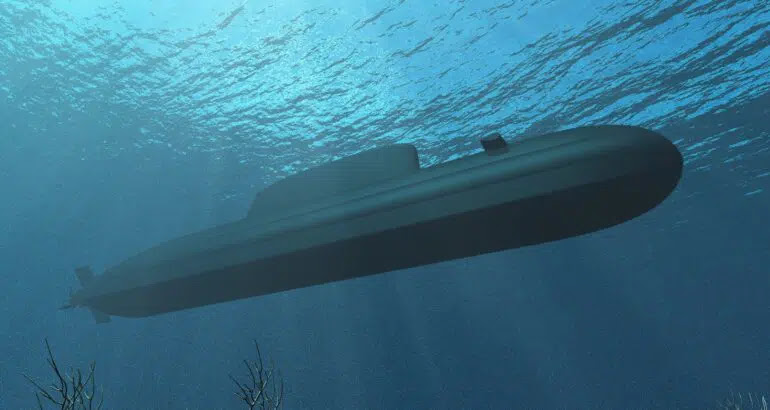
Above and here the Scorpene is featured, courtesy this 2 year old Naval Group video. It begins with 14 Scorpenes sold, but recently India is building 3 more, for a total of 17.

On August 4, 2023 Anonymous from France (with some editing by Pete) commented on France's innovative submarine industrial sector: 

Here is a "French" perspective on the Scorpene successes (17 exported, none built for the French Navy. France’s attack submarines are all SSNs. Probably more Scorpene sales to be confirmed.) The Scorpenes are still without AIP? How come?

A look at the overall picture and a few points (hope not to be too "cocky").

AIP is very important in some tactical/geographical situations, but is clearly not the "panacea" although with high strategic impact. (However, Japan? Australia in 2016? Brazil?). Naval Group’s effort is clearly in the direction of Lithium-ion batteries (LIBs) for submarine. (Battery maker Saft is/will be a major supplier, LFP and see) for at least since 2008. LIBs will likely be introduced in the next Scorpene exports (to Romania, Indonesia, Philippines, Morocco and to India) because this is the obvious road map to the Scorpene story. Adoption of LIBs implies a complete change of the electrical and diesel subsystems, not a minor change.

Israel and South Korea need submerged SLBM platforms that can be protected in nearby bastion waters. Specifically the Dolphin and KSS-III SSBs are protected by friendly aircraft, warships and missile defences. They may rely more on AIP than LIBs.

The Scorpene is an "oceanic" type of submarine, travelling fast and deep, equipped with up to date, if not the best, sub systems

- (Thales sensors, Safran optronic masts, permanent magnet motor and drives from Jeumont, inertial navigation system (laser gyro or fiber) and combat systems...that are also on Saab Blekinges (by and large), South Korean DSME or even the TKMS (navigation in the Type 212CD) proposals, if one looks at the details.

- France’s Thales not only supplies the UK Royal Navy (Thales UK and France have been partners for 40+ years..and the technological building-blocks, components, software modules, test equipment and experience at sea etc, are unlikely to be different ). Also the USN with its latest submarine digital sonars

- the weapon range of the Scorpene is state of the art, F21 torpedoes, Exocet SM39 anti-ship missiles, MdCN cruise missiles..ITAR free are on par with the best world systems.

- Naval technology transfer to India or Brazil alleviates the limited capacity and the high labor cost in France. To achieve for instance 100% indigenous “Make in India”, it is sufficient at the beginning to have modules made in India (or Brazil), incorporated in a third party sale..

- Contrary to TKMS or Saab, Naval Group yards are booked for the next 10/15 years with France’s top priority Barracuda SSN and Third Generation SSBN nuclear orders. Naval Group needs its foreign partners in fact for Scorpene and conventional Shortfin construction.

August 10, 2023

INS Drakon follows Soviet sail launched SLBM tradition.

Submarine Autistry, on August 4, 2023, provided interesting insights on conventional submarine evolution:

“Right now, I think there are two major trends in conventional submarine design.

The first is size. For many years, there weren't really any modern diesel submarines of large size (around 3,000 tons or more) and range (>15,000 nm). The Soviet Union did have conventional submarines with an enormous radius of action [eg. Foxtrots up to 20,000nm] and eg. Tango-class. But these had to rely on the aged principles of the Type XXI submarine (with inferior submerged performance in that German wartime design) in as late as the 1970s. (The succeeding and far more modern Kilo-class was smaller with a much-reduced range [of up to 8,600nm].) But in recent years, Defense Companies have increasingly come up with designs of large, AIP-equipped subs that can cover a lot of distance (examples include Type 216, Type 212CD (E), Saab Blekinge Oceanic, Shortfin Barracuda, Navantia S-80 Plus, Japanese Soryu/Taigei and South Korean KSS-III).

The second trend is VLS cells for SLBM capability, which is most certainly the purpose of [INS Drakon’s] extended sail. I can imagine Drakon [a Dolphin 2] to be used primarily as a one-off test platform for the newly developed missiles so that the technology will be ready by the time the Dakar-class ["Dolphin 3"] boats arrive. Since Israel/TKMS will follow suit after KSS-III kicked off this VLS trend, I can also imagine cooperation with South Korea for missile development, although Israel's missiles will likely be quite a bit larger than South Korea's Hyunmoo 4-4. Certainly very interesting to see such a large sail [on INS Drakon] a modern submarine when people think they will disappear entirely within this century, a charming callback to the early Soviet SSB(N)s! [particularly the Soviet Golf-class SSB that had up to 3 SLBMs in its sail.]

A Soviet era Golf-class conventional sub (SSB) fires one of its 3 ballistic missiles from its sail. Also note the hull deformity downwards below the sail, to accommodate the missiles' size. (Artwork courtesy FAS.)
---

Overall, these two trends clearly point toward an expansion of conventional submarine capabilities into areas that were thus far reserved for nuclear propelled submarines. While I can understand this striving, I'd doubt that the enlarging of conventional submarines can give them the same strategic perks that the nuclear submarine possesses by its very nature (unlimited power!!!; i.e. infinite (submerged) range, blistering speeds). I suppose the biggest benefit of conventional subs, quietness, has already come quite close to its optimum, meaning that constructors are now reorienting toward special features (e.g. “diamond” shape). Also conventional subs have broader capabilities and strategic value (range, armament), while not making the submarine much less quiet than its predecessors - but certainly much more expensive to acquire for potential contractors due to its size.” 

August 3, 2023

"The ASEAN submarine?" by Shawn Chung

India and the ASEAN countries (Map courtesy IndiaASEAN.org) ---

Pete Comment: My good friend Shawn Chung has provided the wide ranging essay below, which highlights the possibilities of Naval Group, TKMS and South Korea providing an increasingly standardized "ASEAN submarine". Shawn also comments on possibilities India might become a major submarines for export builder in the Indo-Pacific region. New types of AIP and LIBs also present new capability and marketing possibilities.


India's future submarine sales might be in conjunction with India marketing its formidable BrahMos multiple launch mode, including SLCM, supersonic cruise missile. India is also joint developing a hypersonic BrahMos-II cruise missile. Of course Hypersonic Cruise Missiles represent a revolutionary technical and strategic change that all great powers are developing and many customer countries, like Australia, might buy.


++++++++++++++++++++++++++


"The ASEAN submarine?"


By Shawn Chung 


When I did my research about the submarine programs of seven Southeast Asian countries (https://gentleseas.blogspot.com/2023/05/state-of-submarine-forces-in-asean-2023.html), two recent occurrences in the submarine market could impact the future acquisition decisions of ASEAN countries, and there is a small probability that a single class of submarines will be selected by navies across South East Asia.


Naval Group Scorpene

The Scorpene class is an export model designed by Naval Group in the 1990s, with the first boat (for the Chilean navy) laid down in 1999, and is in service with the Chilean, Malaysian, Indian (Kalvari-class) and Brazilian navies, with displacement ranging from 1,565 tons to 1,900 tons. 


On the 18th of July 2023, India signed an MoU with France for three more Indian-build Scorpenes, with an Indian created AIP module (https://pib.gov.in/PressReleasePage.aspx?PRID=1703456&s=08 website "down" at present, this alternate works ), which will be retrofitted to the Kalvari class. (https://www.navalnews.com/naval-news/2023/07/india-to-procure-rafale-m-more-scorpene-submarines/)


India restarting Scorpene production could interest both Indonesia and the Philippines (who may select the class for their national submarine programs), especially if India/Naval Group were to sweeten their bids with a VLS module for the upcoming BrahMos-NG cruise missile, which is 2/3rd the size of the original 8.2m BrahMos A. The Philippines is about to commission its first BrahMos A shore-based battalion, while Indonesia is in discussion to buy the missile system. (https://www.reuters.com/business/aerospace-defense/india-russia-defence-firm-eyes-200-mln-missile-deal-with-indonesia-2023-03-15/)


Malaysia also has a further requirement for two new submarines by 2035, and it would be logical, from a training and supply perspective, for the Malaysian Navy to acquire more Scorpene-class submarines, while their two Scorpene submarines have already spent 14 years in service, and are due for MLU. 


The Scorpene class was initially offered with a MEMSA AIP system that used oxygen and ethanol combustion to generate power. In 2019 Naval Group announced a second-generation the FC2G AIP https://www.naval-group.com/en/full-speed-tomorrow module, which extracts hydrogen from diesel to combine pure oxygen within a fuel cell to generate power, increasing submerged endurance by 18 days (https://www.youtube.com/watch?v=TgIWbOtvr3o)


I personally find Naval Groups FC2G AIP to be overcomplicated, as it uses a three step refining process to extract hydrogen from diesel fuel, then injects the refined hydrogen into a fuel cell to generate power. Also, from Naval Group's mock-ups, liquid oxygen is stored in a large tank within the AIP hull module, which could be a safety hazard. In comparison, TKMS/Siemens' fuel cell system, which is used in the Dolphin, Dakar-class, Type-212, Type-214 and Type-218SG classes use oxygen and hydrogen stored in tanks outside the pressure hull.  https://topwar.ru/uploads/posts/2015-03/1425435374_superdolphincomparisondiagram.jpg


India's DRDO-designed AIP module for its Scorpenes' "generates hydrogen onboard", so it's likely the same system as FC2G, and could be the result of a technology transfer from Naval Group. ( https://economictimes.indiatimes.com/news/defence/lt-drdo-sign-contract-for-aip-system-for-submarines-of-indian-navy/articleshow/101187577.cms?from=mdr )


How the new Scorpene order affects India’s convoluted Project-75I program ( https://www.business-standard.com/india-news/project-75i-what-is-it-and-how-has-it-progressed-since-1997-123071200224_1.html ) is anyone’s guess at this point in time. After almost all bidders withdrew or were disqualified in mid-2022, India rescheduled the deadline for August 2023, with the Naval Group Barracuda, Navantia’s S-80 Plus, the TKMS Type-214 or Type-218 (https://frontierindia.com/p-75i-project-germany-and-india-are-close-to-a-deal-to-build-diesel-submarines-jointly/?expand_article=1) and the Hanwha Ocean’s DSME-3000 are still in the running.


Hanwha Ocean DSME-3000

(I can’t find any designation change since they became Hanwha Ocean (HO))


https://youtu.be/0vWdhmQuLoc


South Korea's Hanwha Ocean (formerly DSME) produces the 3,600 ton KSS-III Batch 2 submarine class for the South Korean Navy, and is offering two export variants - the DSME-2000 and the lithium-ion battery equipped DSME-3000, with the DSME-3000 in India’s Project-75I contest. 


The KSS-III bears the distinction of being the first and currently only AIP submarine class with an SLBM capability - using the Hyunmoo 4-4, with a conventional warhead and a 500 km range.


At the recent MADEX 2023, Hanwha Ocean signed an agreement with Babcock Canada to develop the “perfect submarine” for the Canadian Patrol Submarine Project (CPSP) (https://youtu.be/JGSHtCMJ-yc) while this project has only just started and an RFI has not been issued, we do know that Canada will require 12 long range conventional submarines, which need to be introduced in the early-2030s to replace the Victoria class. (https://maritime-executive.com/article/canadian-navy-makes-plans-to-replace-aging-victoria-class-subs)


Also at MADEX 2023, Janes Defense reported that Hanwha Ocean had sweetened their offer to the Phillipines Navy with an update to the 1,400ton DSME 1400-class with KSS III systems - including sensor, combat and propulsion systems (without AIP).


HO’s latest pitch to the PN could also impact Indonesia’s stalled Improved Nagapasa (DSME-1400) submarine program (https://gentleseas.blogspot.com/2023/05/indonesia-state-of-submarine-forces-in.html). We know that Indonesia now intends to buy 2 AIP submarines, and Hanwha Ocean could offer a revision with the DSME-2000 or DSME-3000 design instead of the Improved Nagapasa.


Conclusion


Since India announced it was buying three Naval Group Scorpene-class with AIP, there has been zero articles speculating on the state of the Project-75I program, though I personally think it will be canceled and replaced by 6 AIP Scorpenes. Whether India’s machinations will impact the submarine procurement programs of the Philippines and Indonesia is likely, as both countries already buying Indian arms. A Scorpene built by PT Pal in Indonesia for both navies with Indian-sourced components (and modules) is likely. This could include MLU/Production for Malaysia, and possibly for other ASEAN navies, such as Vietnam, (India just gifted Vietnam a 30 year old frigate).


South Korea is now being called the arsenal of the free world (https://thediplomat.com/2023/07/is-south-korea-ready-to-be-a-global-pivotal-arms-exporter/), offering excellent products like the T/A-50 light jet, the K9 Thunder SPH and the K21 IFV (which just won an Australian Army order). In Southeast Asia, Indonesia, the Philippines, Thailand, Malaysia, and Vietnam already use arms supplied by South Korea.


With the Hanwha Group taking control of DSME earlier this year, we are now seeing a more aggressive marketing push by Hanwha Ocean into the global submarine market.

First Photos of Israel's INS Drakon aka Dragon Dolphin 2


Above is a sideview via Oleg7700 of Israel's INS Drakon aka Dragon moved out of a shed and onto a hardstand at TKMS Kiel, Germany on August 1, 2023. 

Below is an August 2, 2023 side-rear view of INS Drakon (Courtesy Frank Behling from his on X-Twitter account via Oleg7700).


Since August 1, 2023 Oleg7700 from Israel has kindly provided links and details on the first sightings of INS Drakon aka Dragon at the TKMS shipyard in Kiel, Germany. 

Drakon is the third submarine of the Dolphin 2 class. Drakon is very different from the preceding two Dolphin 2s in having a curiously extended fin/sail. 

The purpose of the fin/sail might merely be for streamlining/quietness, or to contain more masts/sensors or perhaps to house between 2 to 4 vertically launched missiles. 

I would estimate Drakon's fin/sail height as being about 6 meters tall. When added to Drakon's beam of 7 meters, that would permit a missile 12.5 meters tall. 

Such a missile might be an enlarged version of Israel's existing Popeye Turbo nuclear tipped supersonic cruise missiles or a new Hypersonic missile. Perhaps it might turnout to be a submarine launched version (SLBM) of Israel's Jericho family of ground launched ballistic missiles.  Alternatively India is known to joint develop and test missiles with Israel, so an Israeli version of India's existing K-4 SLBM/IRBM might also be possible.

The ability of Popeye Turbo SLCMs, from eastern Mediterranean launch points, to hit Tehran has been a technical and strategic reality for over a decade. 

The value of an Israeli K-4 SLBM, with a range of 4,000 km, might include the ability to hit any city in "Islamic nuclear bomb" owning Pakistan. Saudi Arabia reportedly helped fund Pakistan's nuclear program. In turn Pakistan reportedly has a deal with Saudi Arabia to transfer Pakistani nuclear waheads to Saudi Arabia's long range ballistic missile bases at Al Sulayyil and Al-Watah. Such a transfer might be in a buildup to a Saudi war with Israel. Israel's "counter-deal" against Pakistan may be "Pakistan might be at risk of Israeli nuclear warhead impacts if Pakistan is too helpful in supplying nuclear warheads to the Saudis or in a nuclear exchange between Israel and Saudi Arabia". India, Pakistan's nuclear nemesis, might also see value in Israel being an additional country that could threaten Pakistan. 

Eighteen months ago Oleg7700 also located this possible artwork (below) of Israel's future Dakar-class Dolphin 3s to enter service around 2031. The artwork first appeared in Germany's "Kieler" nachrichten news. Comparing the above photos with the artwork below clearly shows the extended fin/sail characteristic. The artwork below also implies the Dakars will incorporate the "Diamond Hull" low sonar reflection technology that TKMS is introducing into its future Type 212CD submarines from around 2029. 


August 1, 2023

Talisman Sabre With Many Participants & Observers

Gessler reported on July 31, 2023:

"Also, India is sending observers for this year's Talisman Sabre [2023] exercise. The next edition of the exercise may or may not see full fledged participation by the Indian military."

Pete Comment

Gessler also identified this July 21, 2023 Australian Defence Ministers' Media Release, which stated, in part:

"Australia’s largest bilateral military exercise with United States, Exercise Talisman Sabre, officially commences today with an opening ceremony on-board [the LHD] HMAS Canberra...at Sydney’s Fleet Base East.

Over the next two weeks 13 nations will participate in high-end multi-domain warfighting across sea, land, air, cyber and space.

Now in its tenth iteration, 2023 is the largest Exercise Talisman Sabre in terms of its geographical area and the number of participating partners.

The exercise aims to enhance interoperability and develop strong relationships between participating military forces. It will involve field training exercises including force preparation and logistics activities, amphibious landings, ground force manoeuvres, air combat and maritime operations. 

Talisman Sabre 2023 will involve more than 30,000 military personnel deploying across Queensland, Western Australia, the Northern Territory and New South Wales. For the first time exercises will also take part around Norfolk Island.

In addition to the United States, forces from Canada, Fiji, France, Germany, Indonesia, Japan, New Zealand, Papua New Guinea, the Republic of Korea, Tonga and the United Kingdom will participate in the exercise. Personnel from India, the Philippines, Singapore and Thailand are attending as observers..."

Pete Comment

China's observers in the shape of a Dongdiao-class Type 815 spy ship, Pennant Number 793, were not actually invited. Such activity is legal. 

Even the US does it. Even at the risk of rather energetic PLA-N argy-bargy. 

Indian Aircraft on Cocos? and/or Christmas? Islands

On July 31, 2023 Gessler drew my attention to: 

A very interesting topic at https://www.thehindu.com/news/national/dornier-c-130-aircraft-deployed-to-australias-strategic-cocos-keeling-islands/article67138889.ece 

By Dinakar Peri, writing at The Hindu (TH) on July 31, 2023 NEW DELHI time.

"Two Indian military aircraft visit Australia’s strategic Cocos Islands"

The aircraft were at Cocos Island for close to a week, which can be an important base for refuelling and operational turnaround for the Indian military; India aims to increase its military-to-military engagement, deepening interoperability in the region.

The photo rather misleadingly implies Cocos Airport can already handle P-8s. The photo depicts a mixture of Indian and Australian military/naval personnel in front of a parked RAAF P-8A. This is probably at Christmas Island Airport because the Indian article indicates Cocos Island Airport has too short a runway to handle a P-8. A P-8 is much heavier (taking a longer runway to land and take off) than the Virgin A320s that fly into Cocos. 

The photo carries the caption "India’s access to Cocos and Christian [(sic) TH means also nearby Christmas] Islands would help the [Indian] Navy monitor movements in the Indian Ocean. File photo. | Photo Credit: Twitter/@AusAirForce". 

"Expanding the strategic reach of the Indian military and improving interoperability with Australia, an Indian Navy Dornier [228] maritime patrol aircraft and an Indian Air Force (IAF) C-130 transport aircraft visited Australia’s Cocos (Keeling) Islands (CKI) in the Southern Indian Ocean, close to Indonesia and strategic maritime choke points earlier [in July 2023] diplomatic and official sources confirmed. 

“Cocos can be an important base for refuelling and Operational Turnaround for the Indian military, especially once the runway there is expanded to accommodate large aircraft like the P-8 long range maritime patrol aircraft,” an official source said on condition of anonymity, while confirming the visit by the Dornier and C-130 aircraft. According to diplomatic sources, the aircraft were at Cocos for close to a week."

Pete Comment

This activity adds a little meat to the Quad quasi alliance's bones. 

India’s Dornier 228s are very small aircraft with a ferry range of about 2,400 km. But from the tip of mainland India to the Cocos Islands is about 3,200 km. 

So the Dornier flight was probably in 2 or 3 hops. It was testing out the viability of much larger, longer range, Indian Navy P-8Is flying a mainland India to Cocos and/or Christmas island patrol route. 

Also RAAF P-8As may want to fly a Cocos and/or Christmas island to India for anti-submarine, anti-surface ship warfare and electronic reconnaissance of land and sea. The reconnaissance mission would also keep an eye on any refugee boats.

There may be local sensitivities from residents of frustratingly governed Christmas Island about an additional presence of RAAF and Indian personnel.