November 19, 2013

Australia to export Uranium to India with weaker safeguards?


Australia's three active uranium mines are Ranger (Northern Territory) Olympic Dam (South Australia) and also Beverley (South Australia).
------------
 

Julie Bishop, Australia's new Foreign Minister
-----------
 
Australia and India will hold the third round of their civil nuclear cooperation talks on November 26-27, 2013 - so what happened - any news? This should lead to a civil nuclear cooperation agreement between Australia and India. The main area of cooperation will be the export of Australian uranium to India. The uranium is exported in the form of uranium concentrate powder which is yellow in colour (hence called "yellowcake"). In chemical terms yellowcake is about 80% uranium oxide.

India is in the unique position of being a broadly endorsed de facto Nuclear Weapons State that has not signed the Nuclear Non-Proliferation Treaty (NPT). The nuclear weapons status of other non-signatories to the NPT (that is Israel, Pakistan and North Korea) is not as internationally endorsed as India's status.

This anomaly is due to India being a great power that could not (due to its colonial status in 1944-45) become an original permanent member (P5) of the UN Security Council (UNSC). India has not (yet) been accepted as a 6th permanent member of the UNSC and may not be as too many other countries (eg. Germany, Japan, Italy, Brazil) are seeking "P" status.

P5 status is mainly based on international acceptance that a country is legitimately a great power. Nuclear weapon ownership is but one aspect of great power status. These nuclear weapons legitimacy arguments are along realist-power-political theoretical lines rather than idealised international legal ("all countries are equal") lines.

As a non-P5 power India effectively did not qualify to become an official Nuclear Weapon State under the NPT. It should be remembered that the P5 great powers organised the NPT (with its rather arbitrary exploded nuclear weapon before 1967 requirement) to make themselves the only legal Nuclear Weapons States.

India's more recent great power status and prominence as a nuclear commerce customer effectively qualifies it in the eyes of Russia, France the US and UK to be a de facto Nuclear Weapons State.

India's non-signatory status regarding the NPT and likelihood some Uranium imports might find their way into India's nuclear weapons program makes for the unusual regulatory and technical problems. The main regulatory problem is that the International Atomic Energy Agency (IAEA) is mainly tasked with preventing non-Nuclear Weapons States from acquiring a nuclear weapons capability.

It is rather pointless for the IAEA to attempt to apply non-Nuclear Weapons State rules to India when India already has nuclear weapons.

The following article is by Stephanie March from ABC Online, dated November 19, 2013  http://www.abc.net.au/news/2013-11-19/australia27s-nuclear-deal-with-india/5101030

Nuclear deal: Australia's uranium deal with India may include  weaker monitoring safeguards

Australia's agreement to sell uranium to India could include weaker monitoring safeguards than the nuclear deals Australia has with other countries.
 
A third round of nuclear cooperation agreement talks are due to take place later this month and both governments say they want the deal settled quickly.

In the past, Australia has required countries to which it sells uranium to track the material more closely than is required by the International Atomic Energy Agency (IAEA).

Andrew Davies from the Australian Strategic Policy Institute says the IAEA tracks aggregate quantities of uranium but does not monitor exactly where uranium sent to India from Australia ends up.
"For example, if 100 tonnes goes into a civilian nuclear program and 90 tonnes of product comes out, they don't know where the missing product was diverted from," he said.

The ABC understands India says it does not have the capacity to provide additional monitoring beyond what is required by the IAEA.

Speaking in New Delhi, Australia's Foreign Minister, Julie Bishop, told the ABC she was reluctant to comment on the talks while they were underway. "I am not going to get ahead of the negotiations and consider hypotheticals," she said. "We have our negotiating team coming here shortly and I am confident that we will be able to conclude an agreement that satisfies Australian standards," she said.

When asked if she could guarantee the agreement would be as strong as Australia's other nuclear cooperation agreements, Ms Bishop said "we will always act in Australia's national interests".

Relations between Australia and India soured when the Rudd-government cancelled plans to sell uranium to India as it is not a signatory to the Nuclear Non-Proliferation Treaty. The Gillard government reversed that position in a move supported by the Coalition. India is not a signatory to the Nuclear Non-Proliferation Treaty and only in recent years started taking steps to separate its military and civilian nuclear programs. Last year, a report from the Indian auditor-general found the country's nuclear safety regulator was weak and unable to properly monitor the industry.

Ms Bishop says Australia will support India joining the Nuclear Suppliers Group."

Comment

Several press articles are significant:

http://www.telegraphindia.com/1131120/jsp/foreign/story_17590750.jsp#.UqAdxZ24bX4 "New Delhi, Nov. 19, 2013: Australia has decided to unconditionally support India’s aspirations to join the Nuclear Suppliers Group, nudging New Delhi closer to membership of the powerful 48-member cartel of nations that controls all nuclear trade"

A December 4, 2013 report http://www.telegraphindia.com/1131205/jsp/nation/story_17645838.jsp#.UqAVR524bX4 "[New South Wales State Premier Barry] O’Farrell, who is in India to promote trade and investment opportunities in his state, assume significance because New South Wales [Australia] recently overturned a decades-old ban on uranium exploration and mining. The change has fuelled hopes that the state, whose capital is Sydney, may eventually become one of the main suppliers to India."

- also http://www.thehindubusinessline.com/news/international/australia-to-support-indias-membership-of-nuclear-supplier-group/article5364782.ece and

- http://www.thehindu.com/news/national/india-australia-inching-towards-civil-nuclear-agreement/article5306545.ece

- http://www.skynews.com.au/world/article.aspx?id=931171 "India 'expands nuclear weapons site"
December 5, 2013

India's Economic Times has a useful sequence of earlier articles on Australia-India nuclear cooperation, including:

http://articles.economictimes.indiatimes.com/2013-11-18/news/44202266_1_australian-uranium-india-and-australia-npt just prior to the Third Round of talks,

http://articles.economictimes.indiatimes.com/2013-07-12/news/40536596_1_uranium-sale-australian-uranium-peaceful-purposes on the Second Round of talks, and

see the lower left side-bar of Economic Times for additional Australia-India articles.
-
Pete

November 13, 2013

Germans sinking Kockums Swedish sub maker?


For the latest on Sweden-Saab vs TKMS-HDW-Kockums see June 11, 2014’s Australia's Future Submarine - Swedish vs German Claims http://gentleseas.blogspot.com.au/2014/06/australias-future-submarine-swedish-vs.html . It is unclear whether Germany or Sweden hold the strongest intellectual property rights to the Stirling AIP. 

For information about Singapore's December 2, 2013, decision to buy two HDW 218SG subs instead of a Kockums sub at http://gentleseas.blogspot.com.au/2013/12/singapore-buying-two-hdw-218sg.html
------------------------


Very simplified artist's conception of ThyssenKrupp Marine Systems' preferred product - largest sub of the HDW range, the future HDW 216. Note the rotary multi-purpose VLS behind the sail-fin.
----------------

See information about Singapore's December 2, 2013, decision to buy two HDW 218SG subs instead of a Kockums sub at http://gentleseas.blogspot.com.au/2013/12/singapore-buying-two-hdw-218sg.html and Saab Being Subsidized to Buy Back Kockums? of March 4, 2014  http://gentleseas.blogspot.com.au/2014/03/saab-being-subsidized-to-buy-back.html .

The Local ("Germany's News in English") has produced this disturbing October 15, 2013 report about an internal corporate threat to the continued functioning of Kockum's Submarine division.

Whether this downgrades Kockum's continued ability to support its Singaporean-Archer Class and Australian-Collin's Class submarine customers remains to be seen.

Does this put Kockums' future submarine A26  at risk of preventing it from being a contender for Australia's large conventional SEA 1000 future submarine project?

Is Kockums' new parent company (German) ThyssenKrupp Marine Systems giving preferential treatment to its competing German HDW 212-214 and 216 submarine products? Note, concerning submarines, the ThyssenKrupp Marine Systems  website only features the HDW products.

The report in full is below http://www.thelocal.de/national/20131015-52407.html :

"Germans look to sink Swedish sub maker"
15 October 2013
"A German industrial giant is waging a campaign of "internal warfare" against one of its own firms - Sweden's flagship submarine manufacturer Kockums - putting key defence deals at risk, sources have told The Local.
German industrial conglomerate ThyssenKrupp bought Kockums in 2005 to form part of what is known as ThyssenKrupp Marine Systems (TKMS), a firm which also owns German submarine maker HDW, a direct competitor of Kockums.

A source told The Local that the purchase was aimed at getting rid of Germany’s Swedish submarine rival and that TKMS was jeopardizing Swedish export deals for submarines with the Australian and Singaporean governments.

"The purchase of Kockums wasn't aimed at consolidating the naval industry and creating synergies, but at getting rid of a competitor," a source in Germany with direct knowledge of the situation told The Local.

Kockums and its predecessors have been building ships for the Swedish navy for centuries at the Karlskrona shipyard in southern Sweden that now serves as the base of the company's Swedish operations.

But according to a German naval manufacturing consultant with ties to TKMS, ThyssenKrupp is actively trying to sabotage Kockums export operations to the advantage of Germany’s HDW, a strategy he dubbed "TKMS über alles" and slammed as "suicide".

The Germans' efforts to sink Sweden's submarine industry have been ongoing since at least 2011, according to the source, when TKMS CEO Hans Christoph Atzpodien denied Kockums the opportunity to bid on a project in Singapore for the construction of new submarines, despite the Swedish firm's long-standing relationship in the country.

Earlier this year, the German firm decreed that the Swedish shipbuilder officially change its corporate name to ThyssenKrupp Marine Systems, scrapping the Kockums brand name that has been a part of Swedish industry since the early 1800s.

'A raging war is taking place'

In August, during a meeting in Bonn, Germany with officials from Singapore defence agency DSTA held, Atzpodien claimed that Kockums "would no longer be capable of designing and building submarines", according to the source.

"A raging war is taking place between Kockums and TKMS," he said, explaining that the Singapore deal has brought the situation into sharp relief.

Among other things, Atzpodien disparaged Kockums plans for a new A26 class of submarine, claiming the Swedish firm didn't have enough engineers to complete the project, and that it was sure to be plagued with cost overruns and delays.

"Atzpodien has systematically ejected Kockums from the discussions and has barred Kockums from Singapore," the source explained.

TKMS has also complicated Kockums' chances for new contracts in Australia, another country where the Swedish shipbuilder has a strong presence, having designed and built six Collins-class submarines in the 1990s in what was one of the largest export deals ever at the time.

But Kockums found itself left out of a 2012 initial call for proposals from Australia to replace the aging subs with an off the shelf solution, while its German-based competitor and sister company HDW was one of three European firms asked to participate.

Earlier this year, however, Australia and Sweden did ink a deal allowing for Kockums to take part in the project, dubbed SEA 1000, which calls for the building of 12 new submarines.

But in the meantime, TKMS purchased an Australian naval defence firm, Australian Marine Technologies, that "could do the same job as Kockums could have done on its own," the source said.

"TKMS has here again torpedoed all the efforts of Kockums to run this future competition because it has already created its own footprint," the source told The Local.

A Swedish saviour?

The Swedish government, as well as officials with the primary defence procurement agency, the Defence Materiel Administration (FMV), has been made aware of the situation and have become so unhappy they have asked Swedish defence contractor Saab to look into a possible purchase of Kockums, a source within the Swedish defence industry told The Local.

"Discussions are taking place right now," according to the source, who agreed that TKMS is trying to strangle Sweden's ship building industry.

"The only reason TKMS owns Kockums is to stop them from exporting," the Swedish source explained, adding that the Swedish firm "could not exist" without export contracts.

Allan Widman, a Liberal Party (Folkpartiet) MP from Malmö and the party's defence policy spokesman said he is "worried" about Kockum's future in light of the rift with TKMS.

"Submarine building capabilities are essential for our armed forces and our ability to defend ourselves," he told The Local, adding that he had heard a number of "industry rumours" about the discord between TKMS and Kockums.

Adding to his concern is the fact that two years have passed since the Swedish parliament Riksdag approved funding for the development of the A26 submarine for the Swedish navy, but nothing has happened, reportedly due to concerns over ThyssenKrupp's ownership of Kockums.

"I hope Kockums isn't prevented from doing business with other countries. It's not constructive," said Widman, adding he would welcome Swedish ownership for the Karlskrona-based shipbuilder.

"I would have no objection to private Swedish ownership of Kockums," he said when asked about the Saab deal.

However, if the Swedish and German firms can't strike a suitable deal to resolve the situation, Widman said the dispute may require a "political solution".

"This is a matter that's vital to our national security," he said, stressing that he hopes both Germany and Sweden can maintain submarine building capacity.

"In the end, however, it may require a political dialogue between Sweden and Germany to find a suitable solution."

When reached by The Local for comment on the Saab-Kockums negotiations, a Saab spokesman refused to comment.

"We don't speculate on rumours like that," the spokesman said.

A spokesperson with FMV also chose not to comment citing an "ongoing procurement".

A spokesman with Kockums in Sweden also refused to comment on the reported disunity within TKMS, while spokeswoman with TKMS in Germany said the company was "unable to comment on market rumours"."
--------------------------------------

A comment on the above post:

"Anonymous said...
"This is a matter that's vital to our national security," --- So why Kockums was offered to a German company first time? What is the problem for Sweden to buy German submarines like Poland did?

"Earlier this year, however, Australia and Sweden did ink a deal allowing for Kockums to take part in the project, dubbed SEA 1000, which calls for the building of 12 new submarines."
This is quite wrong. The deal was Sweden donated intellectual property rights to Australia.
http://www.aspistrategist.org.au/australia-and-sweden-burying-the-hatchet/
Now Australia tries to build with these rights a new Collins-class on its own - good luck!

The Collins-class disaster was partly related to the inability of Kockums to control the project properly. TKMS owned HDW has much more knowledge with license building of submarines. It worked for South Korea. [South Korea has 9 South Korean derivatives Chang Bogo class of the HDW 209 and 3 derivatives Son Won-il class of the HDW 214]

Why should TKMS allow Kockums to design a new A26 submarine while HDW at the same time works on Type210mod? Would GM allow Opel to design quite the same type of car Holden is working on? [as the number of the HDW 210 suggest it is smaller than the HDW 212-214. Specifically the 6 existing HDW 210 mod are of the Norwegian Navy Ula Class http://www.defenseindustrydaily.com/Ula-Tech-Norways-Next-Submarine-Fleet-07609/ and  http://www.network54.com/Forum/211833/thread/1231528114/HDW+Introduces+Type+210mod+Submarine
]
Kockums makes fine Corvettes like the UK makes fine wings for Airbus. Great Britain will never again produce big passenger aircraft on its own.

How well of is Saab Automobile today without a big company in the background?
November 14, 2013"

Pete's Comment

In addition to preventing Kockums being competitive TKMS acquisition of Kockums provide an opportunity to officially or unofficially shift intellectual property (including A26 design information) from Kockums to HDW?

Does this have an Australian dimension concerning German-HDW access to Collins' confidential design and business details?

Pete

November 11, 2013

Remembrance Day 2013 - death of Nain Singh Sailani


Image courtesy of Blue Mountains City Library, New South Wales.
-
This is my article on On Line opinion today http://www.onlineopinion.com.au/view.asp?article=15682 - "Four was to remember".

Pete
-------------------------

Separately The Interpreter website of the Lowy Institute has published an article by Rory Medcalf about an Indian-Australian soldier, Private Nain Singh Sailani, who died on the Western Front in World War One http://www.lowyinterpreter.org/post/2013/11/11/A-remarkable-soldier-linking-Australias-past-with-its-Indo-Pacific-future.aspx:

"A remarkable soldier linking Australia's past with its Indo-Pacific future"

"Today, the 11th of November, is Remembrance Day, marking the Armistice that ended the First World War, a time to reflect on the fallen in that and so many other conflicts. In Australia this year, it also happens to be a day to look to the nation’s future in Asia, since a major conference of the Indian diaspora is getting underway here in Sydney (see my opinion piece on India-Australia relations in The Australian today). The date is not the only thing these two events have in common.

This year I was privileged to learn of an extraordinary thread of military history connecting the nation’s past and its multicultural, Indo-Pacific future. Australians, and even more so Indians, tend to forget that they have long been comrades in arms. Indians fought and died alongside Australians from Gallipoli to Tobruk.

And although Australia’s military history, and the ANZAC legacy, has long been seen as principally the preserve of Anglo-Celtic Australia, there were always some fascinating exceptions, precursors of the inclusive democracy that has become one of this nation’s great strengths and that today’s Australian Defence Force increasingly reflects.

As this country prepares to mark the Centenary of ANZAC, the director of the Australian War Memorial, Dr Brendan Nelson, has introduced a powerful new element to the narrative that institution tells. At the museum’s Last Post ceremony at the end of each day, the story is given of one individual from among the more than 100,000 Australians service personnel who have died in war.
Earlier this year, I visited the War Memorial with a colleague, Indian scholar and Lowy Institute nonresident fellow Raja Mohan. Here is the remarkable story we heard at the end of that day, as prepared by AWM historian Meleah Hampton:

Private Nain Singh Sailani, 44th Battalion

Today, we remember and pay tribute to Private Nain Singh Sailani.

Nain Singh Sailani was born in Simla, India, in 1873. Very little is known about his arrival in Australia, although he may be the N. Saliaani who arrived in Geraldton, Western Australia, in 1895. He would have been 22 years old.

Sailani worked in Western Australia as a labourer, and used the Perth General Post Office to receive his mail. He was friends with Mr Cyril Coleman, a tobacconist in Perth, whom Sailani nominated as the executor of his will.

Sailani volunteered for the Australian Imperial Force in February 1916 as a British subject. He was 43 years old when he was allotted to the 44th Battalion, and went on to have a clear military record except for one training accident in early 1917.

Otherwise he earned no particular censure or praise, but instead was one of thousands of Australians and new Australians who served their battalion quietly. In the period Sailani was with the 44th Battalion in France, they were mostly involved with either holding the front line, or in working parties in or near the front line. Working parties could be particularly dangerous, as they had to work under enemy fire, either repairing or constructing trenches, or carrying ammunition and supplies to the front.

In late May and early June 1917 the battalion was involved in working parties for more than a week in the area around Ploegsteert Wood. On 1 June 1917 the whole Australian front line and reserve area came under heavy German artillery and machine-gun fire. Somewhere in this fire, Nain Singh Sailani was killed in action.

There are no records of the manner of his death, nor was his mother, Ranjore Singh, in Simla sent any details. However, he was clearly a remarkable man. Not only did Sailani, an Indian man, enlist and fight as a private in the Australian Army during the period of the White Australia Policy, but he did so at the age of 43. He arrived in France during one of the harshest winters on record, and yet there is no record of him visiting hospital for any reason, unlike the many stricken by influenza or pneumonia. The silence of his records remains a testament to a strong man. Nain Singh Sailani was buried as an Australian solider in the Strand Military Cemetery in Ploegsteert Wood, Belgium.

His name is listed on the Roll of Honour on my right, along with more than 60,000 others from the First World War.

This is but one of the many stories of courage and sacrifice told here at the Australian War Memorial. We now remember Private Nain Singh Sailani, and all of those Australians who have given their lives in the service of our nation."

November 10, 2013

Indian Air Force Glorified - not Navy


The 81st Anniversary of the Indian Air Force's formation. Air Forces always have the flashiest hardware of the three services. Army tanks and Navy subs just don't rate - one reason why Navies build carriers.


Meanwhile - an Indian Navy cover-up - of a 2009 collision that severely damaged INS Ranvir and INS Kuthar outside the Indian East Coast naval base of Visakhapatnam.

Such collisions never happen to the Australian Navy - or do they http://youtu.be/D1EQwWyf9sE (?) and years earlier the same carrier, HMAS Melbourne, collided with Voyager http://youtu.be/ieDO7woa5iU.
-
Pete

November 9, 2013

Indian “Mangalyaan” Mission to Mars

 
 On November 5, 2013 India successfully launched the Mars Orbiter Mangalyaan” Mission. The mission probe is due to enter Martian atmosphere on September 21, 2014, in search of methane.
-

This video was recorded a couple of days before the November 5, 2013 launch.
 --------------------------------------------------------------
Phys.Org has reported the November 5, 2013 successful launch of the Mars Orbiter Mission (MOM), informally called “Mangalyaan” (in Sanskrit the "Mars-craft"):
“Indian Mars mission on track, makes first engine burns”
[The PSLV-C25 rocket carrying the Mars Orbiter Spacecraft blasted off from the launch pad at Sriharikota, southwest India, on November 5, 2013.]
India's Mars spacecraft has completed the first of a series of engine firings designed to free it from Earth's gravitational pull and propel it towards the Red Planet, scientists said Friday.
The first "orbit-raising manoeuvre", which involves the firing of a liquid fuel thruster, was performed Thursday followed by the second firing on Friday, the Indian Space Research Organisation (ISRO) said.
"The second orbit raising manoeuvre of Mars Orbiter Spacecraft, starting at 02:18:51 hours (IST) on November 8, with a burn time of 570.6 seconds has been successfully completed," the Bangalore-headquartered ISRO said in a statement
India began the quest to become the first Asian country to reach Mars on Tuesday with the successful launch from its southern space station of a 1.35 tonne unmanned probe, which is strapped to a rocket.
 
As it lacks the power to fly directly to Mars, the probe will orbit Earth for nearly a month and the thruster firings are designed to build up the necessary velocity to break free from our planet's gravitational pull.
 
Only once all six of the engine firing manoeuvres have been successfully completed will it begin the second stage of its nine-month journey to Mars.
 
The main aim of the mission is to detect methane in the Martian atmosphere, which could provide evidence of some sort of life form on the fourth planet from the sun.
 
India has never before attempted inter-planetary travel, and more than half of all missions to Mars have ended in failure, including China's in 2011 and Japan's in 2003.
 
The cost of the project, at 4.5 billion rupees ($73 million), is less than a sixth of the $455 million earmarked for a Mars probe by NASA which will launch later this month.
ISRO chairman K. Radhakrishnan has called the mission a "turning point" for India's space ambitions and one which would go on to prove the country's capabilities in rocket technology.
Comment
 
The launch is an initial milestone with mission completion on September 21, 2014 when the probe enters Martian atmosphere.
 
Regarding the oft made argument that India shouldn't have a space program while so many Indians  are starving - the annual space program budget is seven hundred million dollars compared to the twenty billion dollars that India will spend this year to provide subsidised food to two out of every three Indians or the $5.3 billion to be spent this year on a rural employment plan http://www.newyorker.com/online/blogs/elements/2013/11/a-mission-to-mars-on-the-cheap.html
-
Pete

November 3, 2013

Pakistan's Submarine Ambitions


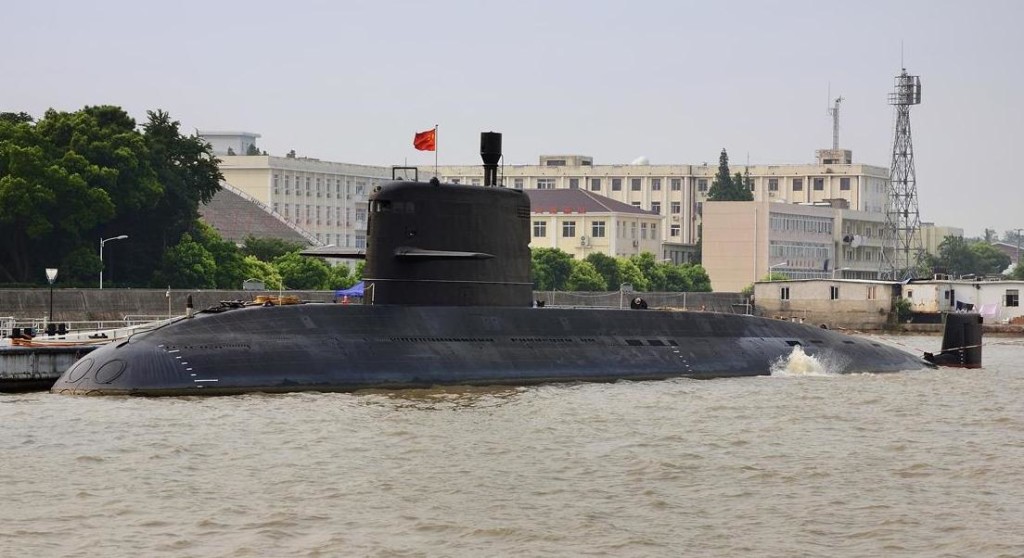
A Chinese Type 041 "Yuan Class" diesel-electric submarine. Pakistan may have sought to buy six of these if funds were available, but funds were not.
-

The Diplomat magazine (based in Tokyo) published an interesting article by Andrew Detsch on October 9, 2013 http://thediplomat.com/flashpoints-blog/2013/10/09/pakistans-oversized-submarine-ambitions/ concerning "Pakistan’s Oversized Submarine Ambitions" 

Detsch interviewed Haris Khan, a senior analyst at PakDef Military Consortium, an independent Tampa-based think tank, with Khan making some points regarding Pakistan's envisaged naval modernisation, including:

  • Pakistan's 2008 debt problems (now standing at US$58 billion) led to the shelving of Pakistan's plans to buy three HDW 214s and tentative plans to buy six diesel-electric Chinese submarines (presumably China's Kilo like Type 041 were envisaged). These would have augmented Pakistan's current submarine fleet of two Agosta-70s, three AIP equipped Agosta 90Bs and three midget MG110 "Cosmos" class subs.

  • According to Khan, since 2001 the Pakistan Atomic Energy Commission (PAEC) has been working on KPC-3, a project “to design and manufacture a miniaturized nuclear power plant for a submarine.” [This is presumably a response http://rusnavy.com/nowadays/concept/opposite/arihant.htm?print=Y to India's indigenous nuclear submarine INS Arihant].

  • "PAEC and the National Engineering and Scientific Commission (NESCOM) have been working on a miniaturized plutonium warhead, a naval version of the Babur land attack cruise missile, which will further enhance Pakistan’s deterrent capability."


Comment

Regarding the reference to a Pakistani KPC-3 submarine nuclear propulsion project - the cost (and opportunity cost) of such an endeavour and low strategic utility of such submarines for Pakistan are two arguments against building nuclear submarines.

Geography indicates that nuclear submarines operating from Pakistan would be highly vulnerable to air power, MRBMs and conventional submarines. Pakistan's AIP capability for its three Agosta 90 submarines is a more cost effective route to provide highly efficient anti-shipping, anti-submarine and missile land attack capabilities.

Nuclear tipped Babur land attack cruise missiles provide a logical capability enhancement.

Connect with this website's http://gentleseas.blogspot.com.au/2013/07/pakistan-submarine-capabilities.html of July 31, 2013.
-
Pete