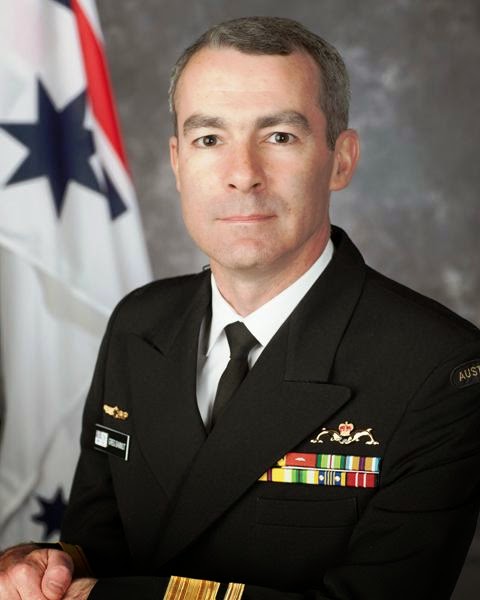
Rear Admiral Gregory John Sammut, Head Future Submarine Program with long experience as a submariner and other positions.
---

Mr Harry Dunstall, Acting CEO, DMO (Defence Material Organisation). Only a thumbnail photo available.
---
Australia's Future Submarine Summit (“Sub Summit”) Adelaide, South Australia, March 24-26, 2015 is just finishing. Many Australian politicians,
military officers, officials and some lucky journalists took part as well as foreign industry representatives and
foreign naval officers.
Yesterday (March 25) much logical procedural
information for the competitive evaluation process was reported in the media.
These details are in several news items but mainly the following http://www.news.com.au/national/politics/government-advisory-panel-to-overseas-future-submarine-project/story-fns0jze1-1227278674311
:
Defence Minister
Kevin Andrews reaffirmed that the competitive evaluation process would
continue. Andrews said that Opposition Leader Bill Shorten’s [of the ALP “Labor
Party”] alternate policy of a Tender (that also included Sweden) would not be
adopted. Significantly Shorten promised he
would honour any submarine contracts signed by the Abbott Government.
Andrews said the Abbott government will appoint an expert
advisory panel to ensure accountability for the first phase of the future
submarine project. That "The panel will oversee the “competitive evaluation process”
between companies from Germany and
France and the Government of Japan. Industry representatives questioned the
move and many wondered how the evaluation process could possibly be fair when Japan was being dealt with on a
government-to-government basis while the German and French builders were on a
commercial level."
“It looks to me
like the decision might already have been made,” said one CEO who asked to
remain anonymous. “This whole process clearly favours Japan.”
Acting
CEO of DMO, Harry Dunstall, said the project…would include maximum
Australian industry involvement regardless of where the vessels were built. There
are three build options on the table, an overseas build, an Australian build or
a hybrid build between Australia and an overseas yard.
Mr Dunstall said potential build partners would submit
pre-concept plans by November 2015
with a decision to be made by government in early 2016.
[Another source advised “Harry Dunstall, …told the
conference that after the bidding contracts had been signed, there would be an eight-month period during which the
companies would prepare their preliminary design proposal and present it to the
government for consideration. [Question - Is that an additional stage of the process?]
Dunstall said Australia would insist on full access to
all technical and intellectual property
details related to the project for the life of the boats.
And firms would be
banned from entering exclusive teaming arrangements with the bidders before
a contract was signed.
“All potential international partners are to be treated
fairly,” Mr Dunstall said. “We want industry to be available to work with any
international partner that we choose.”
Rear
Admiral Greg Sammut, Head Future Submarine Program said key attributes for an Australian
submarine were;
-
range
(how far they could travel)
-
endurance
(how long they could stay there)
-
payload
-
stealth and
-
sensors.
Separately
Germany’s TKMS reported that they just received the:
-
draft
contract
-
statement
of work
-
data
descriptions which tell us what we need to do, and
-
functional
performance specifications (sent through classified channels)
“Submarines must be capable of offensive operations … to
strike the key capabilities of an adversary before they can be brought to bear
against our interests,” Rear Admiral Sammut said.
He said the future submarine had to be affordable and
delivered on schedule and in a fit state for the operators and he issued a
warning about “over optimistic” delivery schedule.
Please link with Submarine Matters' article of March 24, 2015 MHI and KHI not at Australia's Future Submarine Summit, Adelaide, March 24-26, 2015
Pete