January 28, 2025
Germany's Submarine Launched Anti-Aircraft Missile Under Development
Svetlana
Shcherbak for Ukraine based Defense Express has written an excellent article
on what is possibly? the world’s first anti-aircraft missile that
can be launched from a fully submerged submarine. The article
is dated January 26, 2025 and is at https://en.defence-ua.com/weapon_and_tech/30_years_of_idas_development_germanys_underwater_anti_aircraft_missile_to_counter_russian_helicopters_was_it_worth_it-13319.html.
Pete Comment
The submarine launched variant of the in service since 2005 IRIS-T missile has been a long time in (mainly German) development. This may be due to years perfecting the submarine variant's necessary fiber optic cable
link. This link must be able to survive the missile’s surfaced sudden
acceleration and the blast of the rocket motor. Hence the submarine variant missile’s velocity
and rocket blast have been reduced by the developers.
The marginal nature of IDAS as a weapon of last resort, in very shallow water, might mean a limited Baltic market (Germany, maybe Norway, with Sweden as a less likely adopter).
ARTICLE
"30 Years of IDAS Development: Germany’s Underwater Anti-Aircraft Missile to Counter Russian Helicopters – Was It Worth It?

January 26, 2025
1813 0
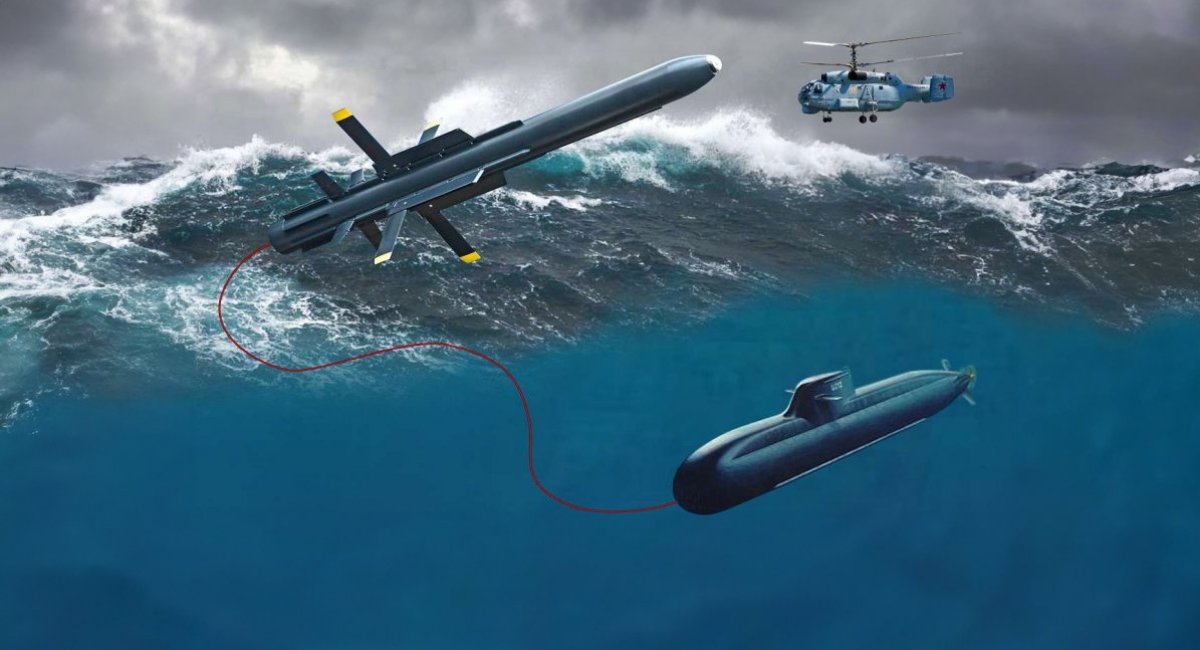
Germany has entered the final stage of developing the
IDAS submarine-launched surface-to-air missile, a project initiated in the
2000s to defend against Russian anti-submarine helicopters [and rotary wing
drones large enough to carry lightweight torpedoes].
The German company [tkMS, on January 24 2025, announced] the signing of a contract with the Bundeswehr’s Procurement Department (BAAINBw) to complete the development and qualification of the Interactive Defence and Attack System for Submarines (IDAS). This unique missile is designed to engage aerial targets while the submarine remains submerged.
The contract stipulates that development and qualification work must be completed by the end of 2029. This means that the creation of IDAS will have taken over 30 years, as initial test trials were conducted in 2003, and the first underwater launch occurred in 2008. Although the project saw active progress in the 2000s, development slowed significantly over time.
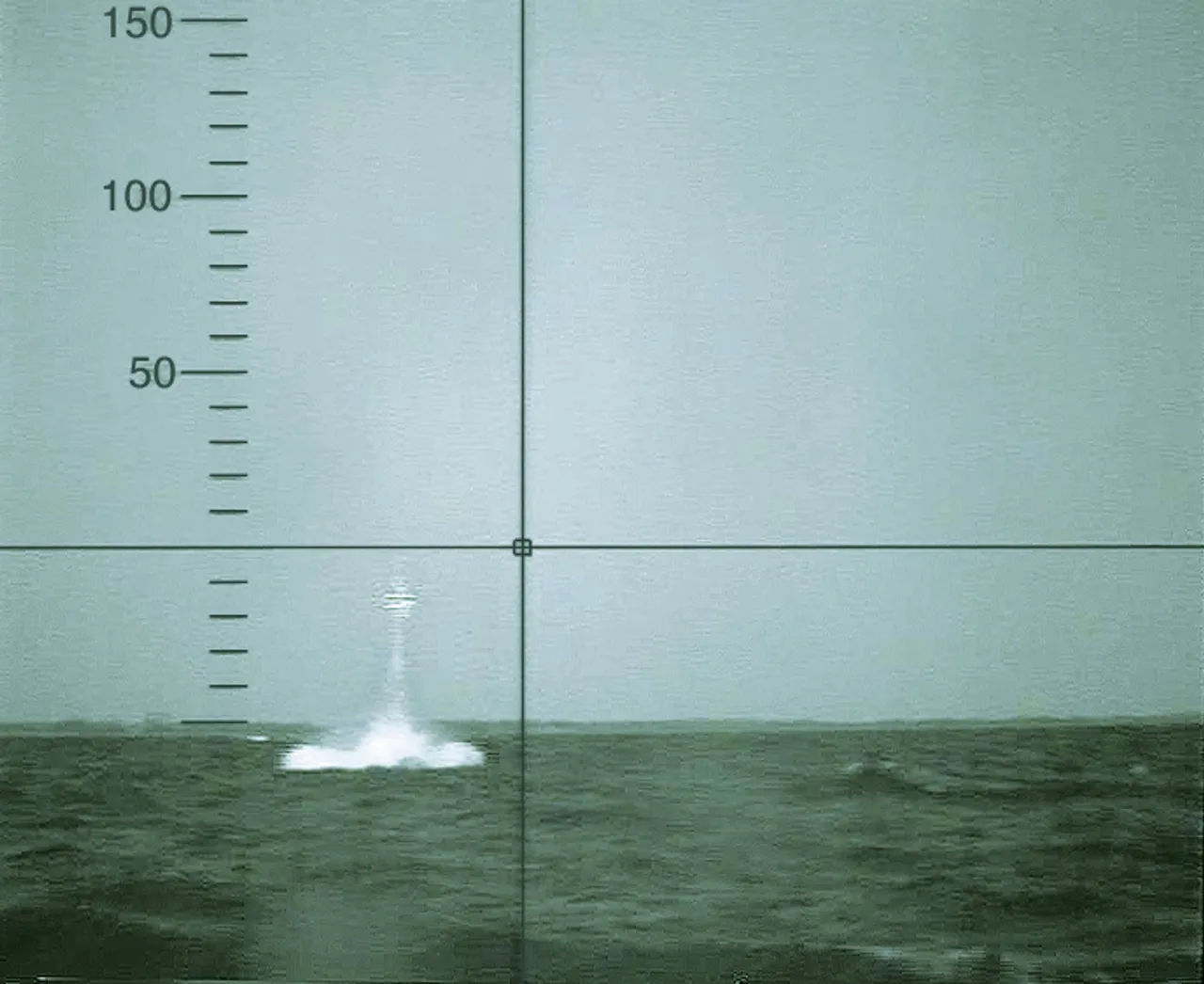
The new contract aims to restart active work and finally bring the project to completion, enabling Germany’s Type 212 [As and CDs] submarines to effectively counter Russian anti-submarine helicopters. Notably, IDAS is being developed by tkMS and Diehl Defence in cooperation with Norway’s Kongsberg and Nammo, as well as Turkey’s Roketsan. This international collaboration highlights the complexity of developing such an advanced anti-aircraft missile, even though it is based on a deep modification of the IRIS-T air-to-air missile.
In general, IDAS will allow submarines to engage low-altitude, slow-moving aerial targets—such as anti-submarine helicopters—at a range of up to 15 kilometers. Additionally, the system is capable of engaging surface and ground targets. However, its speed of 200 m/s is relatively low for an anti-aircraft missile. For comparison, the IRIS-T, on which it is based, reaches 1,020 m/s. Despite this, IDAS is well-suited for self-defense in shallow waters against helicopters equipped with torpedoes and sonar systems.
The IDAS missile is stored and launched from a 533-mm torpedo-sized container, allowing integration into existing submarines without major structural modifications. Each container holds four missiles, along with launch control electronics and an interface system.
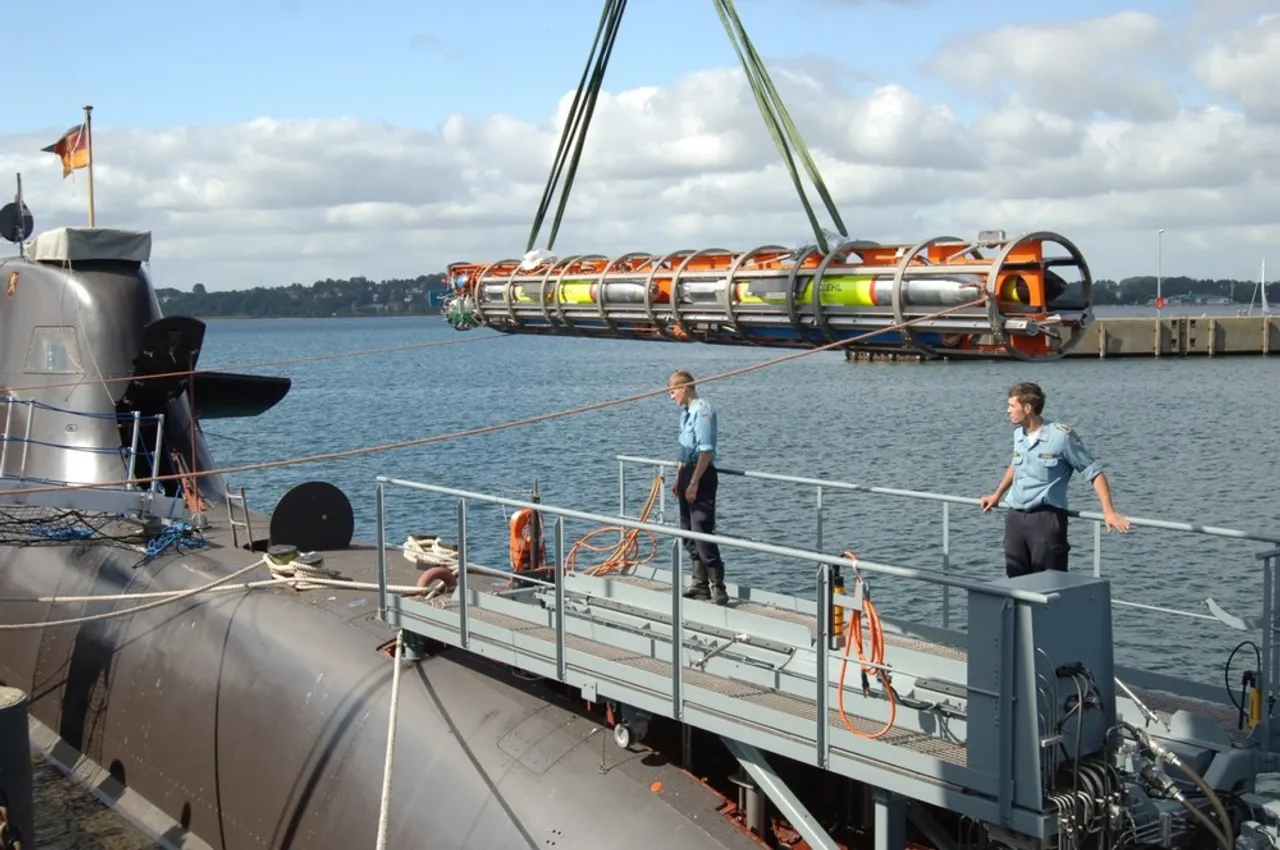
Aerial target detection and tracking rely on the submarine’s onboard acoustic sensors. The missile has a solid-fuel engine, which activates at a safe distance from the launch platform.
Once launched, IDAS manoeuvres underwater toward its target. As it nears, it surfaces, deploys aerodynamic control surfaces, and proceeds to engage.
During its cruise phase, the missile is controlled and guided via a fiber-optic cable. In the terminal phase, it locks onto the target using an infrared seeker before striking.
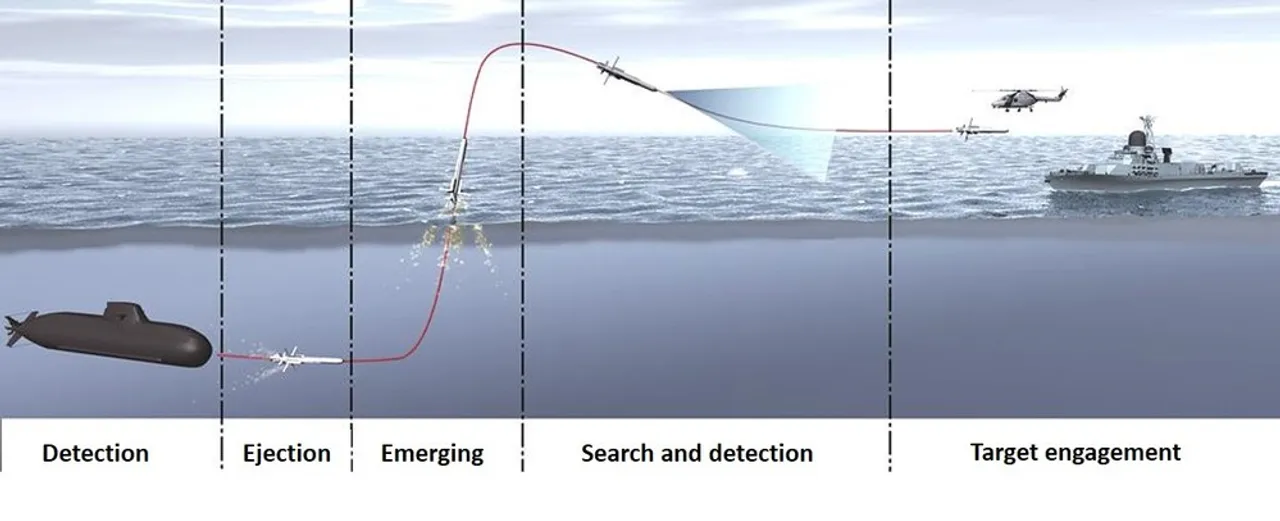
Throughout its flight, the operator [in the submarine] can control the missile and receive live footage from its onboard camera, allowing target identification and prioritization of the most critical threats. If the fiber-optic cable is severed, the missile—depending on preset parameters—either autonomously selects and engages the most likely target or self-destructs to avoid unintended damage.
For submarines, IDAS is essentially a last-resort weapon, designed for situations where a submarine is trapped in shallow waters and unable to dive deep to evade detection. In such cases, IDAS provides a critical defense against airborne threats, ensuring that submarines are not left completely vulnerable."
January 24, 2025
Trump's New Secretary of State Begins Indo-Pacific Engagement on Day 1 - AUKUS Continuity?
As soon as Donald Trump's newly-appointed Secretary of State, Marco Rubio, took the oath of office on 21 January 2025, his first scheduled international engagement (the same day) was with the Foreign Ministers of the other three countries of the QUAD. The QUAD is the Quadrilateral Security Dialogue - comprising the US, Australia, India and Japan.
A short joint QUAD statement was released following the meeting, echoing all the same talking points as established during the Biden administration's term, signalling a degree of continuity.
The text of the joint statement included: "...strengthening a Free and Open Indo-Pacific...[and promoting]...economic opportunity..."
So the joint QUAD statement, via the US State Department, could be seen as promoting free trade which is in contradiction to the Trump Administration contemplating major tariffs against all foreign countries including QUAD members Australia, India and Japan.
 |
| L to R: QUAD Foreign Ministers Japanese Minister of Foreign Affairs Takeshi Iwaya, Indian External Affairs Minister Subrahmanyam Jaishankar, US Secretary of State Marco Rubio, Australian Minister of Foreign Affairs Penny Wong. (Photo courtesy NDTV) --- |
After the joint QUAD session, Secretary Rubio held one-on-one bilateral meetings with the three Foreign Ministers. In the meeting with Australian Minister of Foreign Affairs Penny Wong, the following statement was made regarding AUKUS:
"...Both discussed efforts to continue security cooperation through AUKUS and bilateral defense initiatives..."
This fell short of reaffirming the US would supply Virginia submarines to Australia under AUKUS. Also Trump's nominee for Secretary of Defense, who could be seen as having major carriage for the QUAD and especially AUKUS, has not yet been given Senate confirmation.
It is too early to decide which way the Trump administration might go with regard to initiatives like AUKUS or QUAD as President Trump is unpredictable. However, the State Department's early engagement with the QUAD members and with Australia under AUKUS sends the message that the INDOPAC might be the primary focus area of Trump's foreign policy. All three Ministers were among the handful of foreign representatives invited to the Trump inauguration. This may indicate the Trump Administration sees the INDOPAC as more important than Europe (and within it NATO). In Europe Trump is calling for a quick end to the conflict in Ukraine by placing pressure on Putin for a peace deal.
January 21, 2025
Strava May Be Useful to the Government: 2018 Disclosures
Hopefully the US Government has sent a National Security letter to the owners of US company Strava Inc due to Strava's security and foreign intelligence value.
Real time or retrospective Government use of Strava data, mixed with other government AI technology might be of US domestic security value and value collecting foreign intelligence.
These angles were, of corse, not highlighted in the latest security breaches by French submariners at the ILE LONGUE SSBN Base in Brest, Brittany, France in 2024-to January 2025 [1] [2] and [3].
The security and foreign intelligence values were more obvious in the 2018 series of disclosures [4] and [5]. For example Wired [4] noted on January 29, 2018:
"But
addressing the security risks highlighted by Strava will require much more than
simply updating a few policies. A world dominated by the rise of social media,
the growing availability of commercial satellite and drone imagery, and
increasing usage of smartphones [now miniaturized to Smartwatches] necessitates
an entirely new cultural mentality."
Due to advances in very small microphones, WiFis, mobile tower and GPS tracking any watch may now be a potential security risk. This of course includes smartwatches, but also standard/"dumb" battery watches and even old fashioned non-electric watches (in which an incredibly small battery and microphone may have been secretly inserted).
Those at risk may be those with access to the most sensitive information. If targeted any watch they bring to international, Cabinet or TS level meetings may be a "bug" and/or tracker.
But it is easy to claim "a watch might not have the transmitting power" to send information to intelligence receivers.
However, think about your cell phone. If doctored (even by transmitted spyware), along with your watch (spyware or physical insertion) your cell phone may be the receiver/booster of your watch's real time or subsequently downloaded weak signals. This can happen outside the usual public software/app parameters.
So, if you have access to sensitive information your watch-cell phone combination might be a security risk.
The solution? Not only should you not bring your phone to a sensitive meeting but don't bring any type of watch. Best if any type of watch you have, is regularly swept (alongside your phone) for odd electronic emission activity.
[3] https://www.eurasiantimes.com/french-nuclear-submarines-stealth-mode/
[5] https://www.wired.com/story/strava-heat-map-military-bases-fitness-trackers-privacy/
January 16, 2025
Hamas-Israel Ceasefire Deal: Biden's Questionable Swan Song
President Biden has been taking the credit for the latest Hamas-Israel ceasefire deal. The deal constitutes Biden's outgoing swan song after more than a year of failed ceasefire deals.
The ceasefire is scheduled to begin
on Sunday January 19, 2025. Hopefully It will last past
Trump's Inauguration which occurs the next day - January 20, 2025.
The standard advisor
prediction approach is glass half empty, meaning be slightly pessimistic -
rather than an optimistic fool.
Marika
Sosnowski, Postdoctoral research fellow at the University of
Melbourne, Australia, advised on January 16, 2025 “Israel and Hamas have agreed
to a ceasefire. It doesn’t guarantee a peaceful end to a devastating
war.” See
all of Marika Sosnowski’s
excellent article at https://theconversation.com/israel-and-hamas-have-agreed-to-a-ceasefire-it-doesnt-guarantee-a-peaceful-end-to-a-devastating-war-247338
Marika Sosnowski is implicitly pessimistic when she notes:
“In structure and content, this ceasefire closely
resembles numerous others that have been proposed over
the past year, including the 7+2
day truce agreed in November 2023.”
“As US President Joe Biden said,
this agreement “is the exact framework of the deal I proposed in May” [2024].
“During the first phase, there will
be a temporary suspension of military operations by Israel and
Hamas, as well as the withdrawal of Israeli forces east towards the border
between Israel and Gaza and away from densely populated areas.”
“There will also be a temporary
suspension of air activity (for military and reconnaissance purposes)
in the Gaza Strip, particularly when hostages are released.”
“Over the past 12 months, Hamas has agreed to the
text of a ceasefire a number of times only
to have the terms altered by
Israel and no agreement reached.”
“Hamas has tried to
alter the ceasefire’s terms too.”
“But because of the power
differential, it [Hamas] has been relatively unsuccessful in pressuring Israel
to agree to its demands.”
“…But it is telling that in the past, Israel has
simply arrested
other Palestinians or re-arrested many
of those released under similar deals.”
“…there are currently no written
assurances the ceasefire will continue beyond the first phase if there is no
agreement reached for the second phase.”
“For similar deals that were
previously on the table, Israeli Prime Minister Benjamin Netanyahu made
clear he would continue the war to destroy Hamas after the initial
phase.”
“The war between Hamas and Israel is of course not
over. This ceasefire simply marks the start of a new phase.”
See all of Marika Sosnowski’s excellent
article at https://theconversation.com/israel-and-hamas-have-agreed-to-a-ceasefire-it-doesnt-guarantee-a-peaceful-end-to-a-devastating-war-247338
January 14, 2025
Low Virginia SSN Production Coming to a Head Under Trump
Once the Biden-Harris Administration
(wedded to AUKUS) lost the November 5, 2024 Election US Admirals became increasingly
frank in their assessments that US industry couldn’t build Virginia SSNs quickly
enough to meet USN, let alone AUKUS-Australian, needs.
Karen Middleton, Political Editor of
Guardian Australia, has written an excellent article, Top admiral warns US
far behind on building submarines needed to meet Aukus target, dated
November 19, 2024 (ie. over a week after Trump won the
2024 Election).
Middleton describes the outlook of
the USN officer Rear
Admiral Jon Rucker, program executive officer for Attack Submarines
(PEO SSN), who is most in the know about Virginia class production
limitations.
[Pete Comment] Admiral Rucker's main job is to know more about Virginia SSN shipyard labor shortages and delayed supply chain
realities than politicians. In the article Rucker:
[on November 13, 2024] “confirmed construction is behind schedule and nowhere near the rate required to supply Australia’s Aukus nuclear submarines on schedule… the US had “an exceptionally fragile” military shipbuilding base and could not meet construction rates for its own vessels this year… a materials [read supply chain] shortage had affected the sequencing order of manufacturing and slowed down the production rate."
Backing up Rusker’s warning the USN’s director of
Navy reactors, Admiral
Bill Houston, said:
the
nature of global threats meant “there may be a need for more [high priority] Columbias
[SSBNs also sharing Virginia SSN shipyards]” – appearing to signal the
production pressures may only increase.
“We
are not in low-rate production,” Houston was reported as saying. “We are in the
highest rate of production we’ve been in as a nation [but] with an industrial base
that’s less than half the size [than in the cold war]. It’s an exceptionally
fragile industrial base. It’s with an industrial base that is very, very
challenged.”
In the article see the declining political claims of outgoing US Defense Secretary Austin (loyal to Biden’s AUKUS
Virginia offer to the end). Austin said:
he was “confident” the submarines would be provided.
“Now, we recognise that there are challenges in the
industrial base and we’re doing things to address those challenges,” he said.
Austin
said he had met the leaders of the companies involved [mainly GDEB
and HII
(also see APDR)
who have publicized severe labor shortages and supply chain delays] and
was encouraged by “their focus to get this done, and they will get it done”.
Australia’s part-time Defence Minister Richard
Marles claimed:
“the incoming Trump administration would honour
the Aukus submarine deal, pointing to its bipartisan support in the US
Congress.”
“The Greens’ defence spokesperson – and Aukus
critic – Senator David Shoebridge, said Rucker’s comments proved the deal was
“a mess”.”
See Karen Middleton’s whole excellent article at https://www.theguardian.com/world/2024/nov/19/aukus-submarine-deal-richard-marles-on-track
Admiral Rucker conveyed the warnings at the US Naval Submarine League’s Annual Symposium and Industry Update, in Arlington, Virginia on November 13, 2024. See the US National Defense website.
Pete Comment
The US Admirals are taking a risk telling the
truth. They probably aim to cover themselves because they might be compelled to
share blame for low Virginia SSN production output.
However the incoming Trump Administration might listen to their advice more closely than the outgoing Biden Administration. Biden, unlike Trump, is/was politically wedded to the success of AUKUS Pillar 1.
But it will be a future President, likely in 2031, who will finally decide if any Virginias can be spared for Australia. That future President will be guided by US naval advice. The USN has advised (privately for years and now publicly) that the low Virginia production rate is a long term problem and it competes with higher priority Columbia production. Columbia production hasn't been meeting major deadlines due to the same supply chain delays experienced with Virginias.
I’m also more persuaded by the warnings of US Admirals than politicians’ references to “honour”.
Subscribe to:
Posts (Atom)