June 6, 2023

Vietnam: State of Submarine Forces in ASEAN 2023 – 5

The fifth ASEAN country submarine force in my series concerns Vietnam.

6 boats incommission 


6 Improved Kilo Class (Project 636) submarines 

Ordered 2009

Delivered by 2017

Cost $2 Billion

Displacement 3,000 tonnes


Vietnamese Kilo HQ-186 Da Nang. Image courtesy vnexpress.net
---


Vietnam does not detail news of its submarines for PR or taxpayer/defense budget justification purposes that may apply to democracies. So I don’t have much new post-2020 information on Vietnamese submarine force. Here are some articles with older information:


Vietnam’s (Russian Speaking) Kilo Submarine Service 


Vietnam’s Strategic RelationsCountering China 


https://e.vnexpress.net/interactive/2017/vietnams-new-found-submarine-power-and-where-it-came-from


https://www.fpri.org/article/2019/11/resist-and-reward-vietnams-naval-expansion/


https://medium.com/indo-pacific-geomill/vietnamese-navy-kilo-submarines-77ce5dc97b0b


https://thediplomat.com/tag/vietnamese-kilo-submarine/


https://www.rsis.edu.sg/rsis-publication/idss/1824-vietnams-new-kilo-class-subma/


https://www.cescube.com/vp-vietnam-s-purchase-of-kilo-class-submarines-and-military-modernization


The Vietnamese People's Navy (VPN) is ASEAN’s largest submarine operator, having ordered 6 Improved Kilo Project 626 boats in December 2009, with all boats delivered and in commission by 2017. While there was plenty of coverage prior to the commissioning of these submarines, There are no international articles I can find about their current operational service (including in Vietnamese English news sites).


Vietnam has a long 3,260km coastline, bordering the Gulf of Tonkin, the South China Sea and the Gulf of Thailand (see map above). In general Vietnam faces the most PRC SCS greyzone disruption to its activities within its EEZ. Vietnam has also recently discovered the issue of undersea cable communication disruption, with all five data cables connecting Vietnam to the world ‘experiencing issues. Undersea cables are often broken by fishing and anchoring activities, but tensions in the SCS are becoming more of an issue


Vietnam’s submarine force is ideally located to target China’s naval and civilian surface ships as well as Chinese submarines in the South China Sea. While the VPN’s Kilos will act as a strong deterrent against PLAN belligerence in the South China Sea, they face two main issues. The first is that China also has the same Kilo submarine models, and the PLAN knows the class well for anti-submarine warfare. The second is that Longpo Naval Base,  400km Southeast of Hanoi, on China’s Hainan Island, is the major fleet base complex of China's South Seas fleet, including its aircraft carrier Shandong, other major surface units, SSBNs, SSNs and SSKs.


Vietnam’s Kilos are apparently armed with anti-ship and also land attack versions of the Club S missiles. According to analysts in the region. The land attack missiles represent a significant shift beyond an anti ship, anti sub capability. Land attack is a deterrent complicating China's strategic calculations. These land attack missiles have an official range of 300 km (but probably more) representing a threat a potential threat to China's coastal cities. Vietnam may be the first Southeast Asian country to arm its submarine fleet with a land attack missile. 

Vietnam is now facing increased pressure from the USA to upgrade its relations. Or should Vietnam revert to Chinese suzerainty, forty years after Vietnam fought off the PLA in the bloody 1979 invasion?


Shawn Chung
June 6, 2023

June 5, 2023

Malaysia: State of Submarine Forces in ASEAN 2023 – 4

The fourth ASEAN country submarine force in my series concerns Malaysia.

2 in commission, 2 planned


2 Prime Minister-class (Scorpenes)

Ordered 2002

Delivered by 2009

Cost $1.24 Billion (including an Agosta-70 for initial training)


Scorpene KD Tunku Abdul Rahman image courtesy: www.malaysiandefence.com
---


While Malaysia’s two Perdana Menteri (Prime Minister) class submarines appear frequently in the news, it has very little to do with their service history in the Royal Malaysian Navy (RMN). Rather, news swirls around the corruption that occurred during the submarine bid, involving a former Malaysian Prime Minister (who was the Defense Minister who sealed the deal). He is now in jail for: rampant kleptocracy; some Thales/Naval Group connections; and, the death of a Mongolian interpreter/model/escort, who was shot twice and her remains destroyed by explosives.


The two submarines, named after the first and second Prime Ministers of Malaysia, Tunku Abdul Rahman and Tunku Abdul Razak, were commissioned into RMN service in 2010 and are based at Sepanggar naval base in Kota Kinabalu, Sabah. The Malaysian state of Sabah, located on the northern portion of Borneo island, has some amicable territorial disputes with Indonesia and the Philippines, as well as Malaysia’s South China sea possessions that are claimed by China with the Nine-Dash-Line policy.


Subject to many rumours and conjecture, an early manufacturing defect when Malaysia’s Scorpenes first entered service did not add to Malaysian public confidence. Now both submarines are operational and by 2019 had logged a total of 11,600 hours submerged. A recent eighteen-month refit included the installation of a new communication feature on the fin/sail, an Alesamar Buoyant Wire Antenna


Malaysia has many plans to modernize its armed forces under the 15-to-5 transformation program, in which the RMN would have four submarines by 2050. But Malaysia’s US$350 billion national debt, exceeding 80% of annual GDP, remains an obstacle.


In Feburary 2023, the Malaysian Defense Ministry unveiled a long-term plan to acquire two additional submarines from 2031 to 2040.


Malaysia actually purchase three submarines in 2002 – the 2 Scorpenes and the ex-French Navy Agosta-70 class Ouessant (S623) transferred to the RMN in 2005 to 2009 as a training vessel, operating in Brest, France, before being shipped over to Malaysia in 2011 to become a submarine museum.


Shawn Chung

June 5, 2023

June 1, 2023

Singapore: State of Submarine Forces in ASEAN 2023 – 3

The third ASEAN country submarine force in my series concerns Singapore.

4 in commission, 3 pre-commission, 1 in production


Challenger-class (ex-Sjoormen A11) 

5 boats: 2 active, 2 retired, 1 acquired for spares

Displacement 1,200 tonne

Acquired 1995

Delivered by 2002


Challenger-class image: courtesy Wikipedia/Erik Sevilla Estrada
---


Archer-class (ex-Vastergotland A17) 
2 boats, in commission
Displacement 1,400 tonnes
Acquired 2005
Delivered by 2010


RSS Archer image: courtesy Seaforces.org/Kockums
--- 


Invincible-class (Type 218SG) 
3 delivered, 1 in production

Displacement 2,200 tonnes

Ordered 2014

To be delivered from 2023-2026


Invincible-class image: courtesy @WarshipCam
---

 The history of the Republic of Singapore Navy’s (RSN) submarine service is a clear demonstration of what Dr. Tim Huxley, in his book Defending the Lion City: The Armed Forces of Singapore (2000) referred to as defence capabilities creep - in that every generational step of a weapons system adds new capabilities to Singapore’s Armed Forces. 

In the case of Singapore’s submarine service, its humble beginnings started when Singapore purchased 30 year old Sjöormen class A11 submarines in 1995 from Kockums’ used submarine pier.
 

All five boats of the retired Sjöormen class were purchased, with the last boat, HSwMS Sjöhästen, cannibalised for spare parts for her four sisters. After modernisation and tropicalisation, the four boats of the Challenger-class entered RSN service by 2002. Two boats (RSS Challenger and RSS Centurion) were decommissioned in 2015. RSS Conqueror and RSS Chieftain remain in service today, though both boats are over 50 years old now. In the 20 years that they’ve served in the RSN, the Challengers set the foundations for Singapore’s submarine operations. By 2019 two RSN submarine officers were “Perisher” graduates.
 

Following on from the Challenger-class, in 2005 Singapore acquired the two remaining Västergötland class submarines, which were placed in Swedish naval reserve in the early 2000s, while their two sister boats were upgraded with AIP modules to become the Södermanland-class (HSwMS Södermanland is about to undergo a second life extension, and remain in service to 2028).


RSS Archer (ex-HSwMS Hälsingland, launched 1987) and RSS Swordsman (ex-HSwMS Västergötland, launched 1986) received an extensive refit similar to the Södermanlands, including AIP. The Archers also received tropicalization, air conditioning, a Singapore-developed flank sonar array, and were commissioned into the RSN in 2011 and 2013.


The Challengers are a traditional SSKs (though one of the first with a teardrop hull shape) with limited range and the need to frequently snort. In contrast the Archers were refitted with Kockums’ Stirling AIP hull sections, which greatly extended their fully submerged endurance. The Archers also have a pressurized diver’s lockout (part of the 12m AIP module insert) a first on an RSN submarine. It is likely that the Archers have double the endurance of the Challengers, and are frequent visitors to the Andamans for training and exercises with the Indian Navy.


In 2013-2014 Singapore held a submarine contest between TKMS and Naval Group. Also see Submarine Matters on thisTKMS was selected to supply two Type 218SG submarines for US$1.36 billion, with a follow-on order placed in 2017 for two additional boats. The first in class, RSS Invincible, was launched by TKMS in Kiel in February 2019, but has remained in the German city for shakedown trials and training, and is slated for delivery to Singapore in 2023. The second and third boats were launched together in December 2022. The second boat of the class, RSS Impeccable, is on its way to Singapore, and should make an appearance on Singapore’s National Day Parade on August 9, 2023.


The Invincible class will replace both the Challenger class and Archer class, so it is assumed the RSN will keep its submarine fleet at four boats. The Invincibles “can stay submerged 50% longer than the Archer-class”. They have advanced automation plus a high level of situational awareness, with expanded flank arrays and towed array sonar. The Invincibles also have a bigger payload capacity (including more torpedoes and other weapons) than the Archers, This may include a submarine launched version of the locally developed (with some Israeli assistance) Blue Spear anti ship cruise missile. 


Blue Spear, an anti-ship/land attack cruise missile, has been recently confirmed to replace Harpoon in the ASM role for Singapore’s six Formidable-class frigates. Blue Spears will also likely arm the RSN’s six upcoming, larger, Multi-Role Combat Vessels (MRCVs).


Singapore’s maritime security had a major revamp in the late 2010s, resulting in the division of the ‘fleet’ into two commands in 2020Fleet Command contains four Flotillas with Frigates, Missile Corvettes, LSTs and Submarines. While Maritime Security Command (MARSOC)  contains Littoral Mission Vessels, Maritime Security & Response Vessels, Force Protection and UUVs.


What is clear is that this fleet division created two commands with separate primary tasks, with the Fleet tasked with power projection and ‘outside littoral boundary’ missions, like patrolling SLOCs. 

MARSOC is focused on the ‘near shore’ - Singapore’s territorial waters, undersea cables/pipes and near sea lanes such as the Malacca Straits, with unmanned vessels providing port security and infrastructure protection, including counter naval mine warfare and seabed inspection.


Singapore has a neutral defence policy. Singapore and China are establishing a secure defence telephone line after signing an MOU on June 1, 2023.  

Shawn Chung
June 1, 2023

May 31, 2023

Indonesia: State of Submarine Forces in ASEAN 2023 – 2

The second ASEAN country submarine force in my series concerns Indonesia.

4 submarines in service, 2 - 5 orders possible

Cakra-class (Type 209) 

2 boats, 1 in commission, 1 lost

Displacement 1,390 tonnes

Ordered 1977

Delivered by 1981 


(KRI Cakra 401 image courtesy Wikipedia)
---


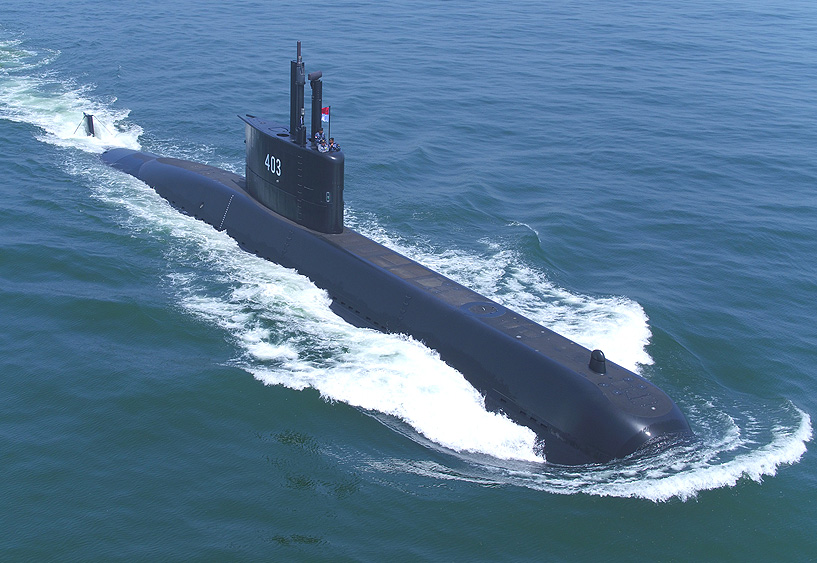
Nagapasa-class (Improved Chang Bogo) 

3 in commission, 3 on order?

Displacement 1,400 tonnes

Ordered Batch 1: 2011. Batch 2: 2019

Delivered: Batch 1 2017-2022, Batch 2 by 2026

Cost: $1.1 billion Batch 1

$1.02 billion Batch 2


KRI Nagapasa 403 image: Hanwa Ocean (DSME) 
---


Scorpene-class

4 planned?

Intention to purchase MoU signed

Displacement: 2,000 tonnes 

Indonesia is the world's largest archipelagic state, with over 17,000 islands, and it controls a number of important SLOCs (Sea Lanes of Communication). While the Malacca Straits is most frequently cited in the news, its 25 metre depth limits the size of ships that can use it, and there is an existing framework of coordinated naval patrols with  Singapore and Malaysia, the Malacca Straits Patrol. 

Extremely large displacement (above 300,000 DWT) container ships, VLCC supertankers, gas and bulk carriers transit Indonesia’s islands via the Lombok and Makassar Straits (the Indonesian Navy has a submarine facility in Palu, central Sulawesi). Thankfully, Indonesia has enjoyed excellent defense relations with India (who would like to sell BrahMos supersonic cruise missiles to Indonesia), so its West flank is relatively secure. 


To the North - Indonesia has to monitor the Natuna Sea and cross border crime and terrorism in the Celebes Sea. To the West - the South West Pacific near West Papua, while in the South the Timor Sea and Arafura Sea are shared with Australia. 


Within the Indonesian Archipelago, Indonesia monitors and polices the Java, Bali, Flores, Banda, Molucca, Seram and Halmahera Seas, and the Makassar Strait, and the discovery of three PRC UUV’s within Indonesian territorial waters will be a cause for concern.


Recent greyzone incursions by Chinese fishing boats, and the Chinese Coast Guard, into the EEZ of the Natuna islands, have also alarmed Jarkarta. This has led Indonesia to a buildup of military bases in the Natunas, including a submarine support station. The region has large natural gas reserves, including the West Natuna-Singapore pipeline, that when it opened in 2001, supplied Singapore with 100 million standard cubic feet per day of natural gas. 


During Indonesia’s expansionist period in the 1960s, the Indonesian Navy saw a massive infusion of Soviet arms, including 12 Whiskey-class submarines in 1962. It is unknown whether the Whiskeys were gifted by the Soviets to Indonesia or to what degree they were Soviet crewed. In any case they were potent symbols of the leadership of the Soviets in the “anti-imperialist struggle” against the West.


The Whiskeys’ most notable function was in the Indonesian War of Independence against the Dutch East Indies colonial administration. The Whiskeys were decommissioned by 1990 were scrapped, except the ex-KRI Pasopati 410, which is now a museum monument in Surabaya.


Indonesia’s second generation submarines were two Cakra-class (Type 209) boats from Germany's HDW, ordered in 1977, commissioned in 1981. The class received a major refit with HDW from 1986 to 1989, and a second refit from South Korea's DSME in the 2000s. KRI Nanggala 402 was tragically lost in April 2021 and KRI Cakra 401 remains in commission.


In 1997 Indonesia was going to purchase 5 ex-German Navy Type 205s, but this was scuppered in 1998 due to the 1998 Indonesian riots and the fall of the Suharto regime.


In December 2011, Indonesia awarded DSME a $1.07 billion dollar contract for three Nagapasa 403-class (Type 209 Chang-bogo variant) submarines, with the third submarine assembled in Indonesia by state shipbuilder PT Pal and launched in 2021 (scroll down to submarine Table here). According to Kompas.comNagapasa 403 recently introduced a torpedo countermeasure system with mobile acoustic jammers and mobile acoustic decoys and is capable of launching anti-ship missiles.


In 2019 Indonesia signed a $1 billion dollar deal for a second batch of Nagapasa boats from DSME. But by November 2022 Navalnews.com reported that Indonesia had not issued a letter of credit to DSME to activate the project.  DSME has incurred a loss from purchasing long-lead time components in anticipation for this order. Why did the deal stall?


While the Nagapasa Batch 2 deal was uncertain in January 2020 Navyrecogintion.com reported that Indonesia was planning to purchase up to four Scorpene-class submarines from Naval Group.


In non-submarine news Indonesia might also buy 2 Gowind corvettes from Naval Group. Though in June 2021 Indonesia instead signed a contract for 6 FREMM frigates from Italy's Fincantieri and two refurbished Maestrale frigates from Fincantieri. An export design contract between Babcock and PT PAL was also signed in 2022 for two Type 31 frigates. In May 2023 Fincantieri updated Shepard Media that their deal had not yet entered into effect, though for the two Type 31s are now being built.


Nikkei reported in May 2021, just after the loss of KRI Nanggala, that Indonesia aims to expand its submarine fleet to 12 vessels.  

Indonesia’s PT PAL CEO talked to Naval News at NAVDEX Abu Dhabi held February 20-24, 2023. The CEO mentions Germany (presumably TKMS) is also bidding to provide future submarines for Indonesia. PT PAL would like to build them in Indonesia. It is unclear whether the Indonesian Navy is enthusiastic for new TKMS subs. The fact the PT PAL’s CEO did not mention the Nagapasa Batch 2 deal is very telling. Indonesia has put that contract in doubt since 2020.

PT PAL signed a MoU with the Naval Group in March 2022 for two Scorpene-class submarines, so if we take this MoU together with the issues over the second batch of Nagapasa boats, we can hypothesize that the Indonesian government is in the process of switching from DSME to Naval Group. This would involve PT PAL  producing licensed Scorpenes in a similar manner to the Scorpenes being licence built at Mazagon Dock Limited (MDL) in India.  

Recently Asia Times reported that Indonesia would drop the Chang Bogos, and for 2023 the Indonesian Defense Ministry has requested funding/loans for the procurement of two AIP submarines of 1,800 tons and 2,800 tons displacement. Whether the AIP submarines might be Scorpenes (with newly developed AIP) or TKMS Type 214s (known for their fully operational AIP) is unclear.

Shawn Chung
May 31, 2023

May 29, 2023

Thailand: State of Submarine Forces in ASEAN 2023 – 1

The first ASEAN country submarine force in my series concerns Thailand. 

1 submarine on order


S26T model Image: courtesy Asianmilitayreview.com
---

Matchanu-class S26T variant of the Type 039A Yuan.

1 on order, 2 tentative

Displacement 2,550 tonnes

Selected 2015, First boat ordered 2017 

May be delivered: 2025

Price - US$380 million
 

The Royal Thai Navy (RTN) is scheduled to receive its first submarine in 2023, but what is not common knowledge is that the Royal Thai Navy is actually the oldest submarine service in ASEAN, as its predecessor, the Royal Siam Navy, operated submarines from 1938 to 1951.


In 1935 Thailand acquired four 350 tonnes coastal submarines from Mitsubishi Heavy Industries, which were delivered by 1938. This first/original Matchanu-class served through WW2, but as Japan was disarmed post-war, they became unserviceable. They were scrapped following a failed coup attempt by Thai naval officers in the 1951 Manhattan Rebellion.
 

This explains the deep seated desire of the RTN to operate submarines. 
 

In 2015, the RTN held a tender process and selected the S26T (an export variant of the Type 039A Yuan), as China Shipbuilding & Offshore International Company (CSOC) offered a very low total price of US$1 billion for all 3. The RTN secured a $390 million procurement contract with CSOC in 2017 for the first boat, but the follow up order for the next two boats has been delayed due to public discontent over the cost during the COVID-19 pandemic.
 

Various reports have stated that the Thai Navy requires submarines for operations in the Andaman Sea and the Gulf of Thailand, as well as to ‘keep up with the neighbors’, with Malaysia’s 13 year old Scorpenes specifically cited.
 

With a maximum depth of 85 metres, the Gulf of Thailand is relatively shallow for modern submarine operations. While the Andaman Sea is dominated by Indian military bases in the Andaman and Nicobar Islands, where up 32 Indian Navy ships are based. Also infrastructure upgrades have been completed to accommodate Indian jet fighter and P8I Poseidon patrol aircraft detachments.
 

In February 2022 it emerged that CSOC specified German-made MTU 396 submarine diesel engines in the Thai contract, which have been subject to an EU arms embargo on China since 1989. While CSOC has offered Chinese-built CHD620 engines as replacements (or a pair of decommissioned PLAN boats), the RTN is considering its options, including canceling the deal.
 

The engine issue has been reported as settled by April 2023, with ‘Chinese authorities guaranteeing the safety of the engines’ and the Thai Navy estimating the first S26T might be delivered by 2025. Pakistan’s Hangor-class S26T deal is also mentioned - that deal might also be delayed due Chinese CHD620 diesels replacing the previously expected MTU 396s 

According to Asiamilitaryreview.com, quoting CSOC specifications, the S26T has a displacement of 2,550 tonnes (this may be surfaced displacement as the submerged figure for a Chinese Navy Type 039A is 3,600 tonnes). A S26T also has a nominal crew of 38, with accommodations for 46 bunks, and a separate commander’s quarters. Claimed maximum endurance is 65 days at sea with transit distances of up to 8,000nm (14,800km). These specifications mean that an S26T could easily transit from the RTN’s main naval base at Sattahip to patrol areas in the South China Sea or Bay of Bengal with a small Royal Thai Navy SEALs contingent.


Shawn Chung
May 26, 2023

State of Submarine Forces in ASEAN 2023

Shawn Chung has kindly written 8 articles for publishing on Submarine Matters over the next 2 weeks. This is the first generalised article and the next 7 articles deal with the 7 ASEAN countries that have, or will have, submarines. Most links are in string form but when embedded in text they are bolded. So Shawn writes:


Several news articles (below) sparked my interest in crafting a brief update on the State of Submarine Forces in ASEAN 2023. This is because 6 of the 10 ASEAN members (Thailand, Indonesia, Singapore, Malaysia, Vietnam and Myanmar) are/will be submarine operators in 2023, with the Philippines potentially joining the submarine club in future.


The news articles are:


https://www.channelnewsasia.com/commentary/submarine-invincible-singapore-navy-asian-china-defence-3186236


https://www.republicworld.com/world-news/rest-of-the-world-news/as-us-china-rivalry-heats-up-southeast-asian-countries-in-race-of-acquiring-submarines-articleshow.html

https://www.asianmilitaryreview.com/2022/06/submarine-status/

https://www.nti.org/analysis/resource-collections/submarine-proliferation-resource-collection/

Arranged in chronological order of submarine service. I will not go into the specifics of each submarine class, rather the main emphasis is on deals, recent history, some political and market issues. I have used OSINT for references.

Shawn Chung

May 26, 2023