November 10, 2013

Indian Air Force Glorified - not Navy


The 81st Anniversary of the Indian Air Force's formation. Air Forces always have the flashiest hardware of the three services. Army tanks and Navy subs just don't rate - one reason why Navies build carriers.


Meanwhile - an Indian Navy cover-up - of a 2009 collision that severely damaged INS Ranvir and INS Kuthar outside the Indian East Coast naval base of Visakhapatnam.

Such collisions never happen to the Australian Navy - or do they http://youtu.be/D1EQwWyf9sE (?) and years earlier the same carrier, HMAS Melbourne, collided with Voyager http://youtu.be/ieDO7woa5iU.
-
Pete

November 9, 2013

Indian “Mangalyaan” Mission to Mars

 
 On November 5, 2013 India successfully launched the Mars Orbiter Mangalyaan” Mission. The mission probe is due to enter Martian atmosphere on September 21, 2014, in search of methane.
-

This video was recorded a couple of days before the November 5, 2013 launch.
 --------------------------------------------------------------
Phys.Org has reported the November 5, 2013 successful launch of the Mars Orbiter Mission (MOM), informally called “Mangalyaan” (in Sanskrit the "Mars-craft"):
“Indian Mars mission on track, makes first engine burns”
[The PSLV-C25 rocket carrying the Mars Orbiter Spacecraft blasted off from the launch pad at Sriharikota, southwest India, on November 5, 2013.]
India's Mars spacecraft has completed the first of a series of engine firings designed to free it from Earth's gravitational pull and propel it towards the Red Planet, scientists said Friday.
The first "orbit-raising manoeuvre", which involves the firing of a liquid fuel thruster, was performed Thursday followed by the second firing on Friday, the Indian Space Research Organisation (ISRO) said.
"The second orbit raising manoeuvre of Mars Orbiter Spacecraft, starting at 02:18:51 hours (IST) on November 8, with a burn time of 570.6 seconds has been successfully completed," the Bangalore-headquartered ISRO said in a statement
India began the quest to become the first Asian country to reach Mars on Tuesday with the successful launch from its southern space station of a 1.35 tonne unmanned probe, which is strapped to a rocket.
 
As it lacks the power to fly directly to Mars, the probe will orbit Earth for nearly a month and the thruster firings are designed to build up the necessary velocity to break free from our planet's gravitational pull.
 
Only once all six of the engine firing manoeuvres have been successfully completed will it begin the second stage of its nine-month journey to Mars.
 
The main aim of the mission is to detect methane in the Martian atmosphere, which could provide evidence of some sort of life form on the fourth planet from the sun.
 
India has never before attempted inter-planetary travel, and more than half of all missions to Mars have ended in failure, including China's in 2011 and Japan's in 2003.
 
The cost of the project, at 4.5 billion rupees ($73 million), is less than a sixth of the $455 million earmarked for a Mars probe by NASA which will launch later this month.
ISRO chairman K. Radhakrishnan has called the mission a "turning point" for India's space ambitions and one which would go on to prove the country's capabilities in rocket technology.
Comment
 
The launch is an initial milestone with mission completion on September 21, 2014 when the probe enters Martian atmosphere.
 
Regarding the oft made argument that India shouldn't have a space program while so many Indians  are starving - the annual space program budget is seven hundred million dollars compared to the twenty billion dollars that India will spend this year to provide subsidised food to two out of every three Indians or the $5.3 billion to be spent this year on a rural employment plan http://www.newyorker.com/online/blogs/elements/2013/11/a-mission-to-mars-on-the-cheap.html
-
Pete

November 3, 2013

Pakistan's Submarine Ambitions


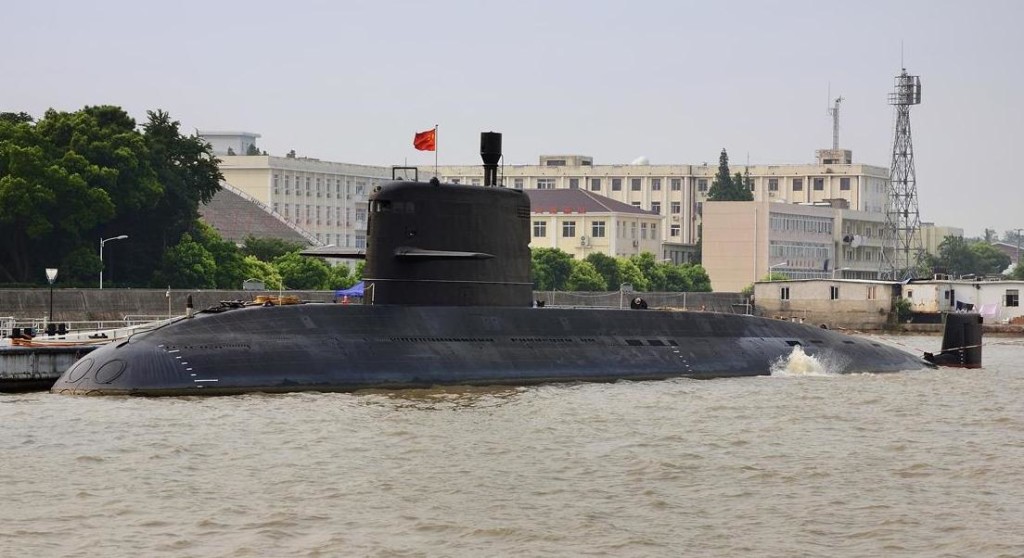
A Chinese Type 041 "Yuan Class" diesel-electric submarine. Pakistan may have sought to buy six of these if funds were available, but funds were not.
-

The Diplomat magazine (based in Tokyo) published an interesting article by Andrew Detsch on October 9, 2013 http://thediplomat.com/flashpoints-blog/2013/10/09/pakistans-oversized-submarine-ambitions/ concerning "Pakistan’s Oversized Submarine Ambitions" 

Detsch interviewed Haris Khan, a senior analyst at PakDef Military Consortium, an independent Tampa-based think tank, with Khan making some points regarding Pakistan's envisaged naval modernisation, including:

  • Pakistan's 2008 debt problems (now standing at US$58 billion) led to the shelving of Pakistan's plans to buy three HDW 214s and tentative plans to buy six diesel-electric Chinese submarines (presumably China's Kilo like Type 041 were envisaged). These would have augmented Pakistan's current submarine fleet of two Agosta-70s, three AIP equipped Agosta 90Bs and three midget MG110 "Cosmos" class subs.

  • According to Khan, since 2001 the Pakistan Atomic Energy Commission (PAEC) has been working on KPC-3, a project “to design and manufacture a miniaturized nuclear power plant for a submarine.” [This is presumably a response http://rusnavy.com/nowadays/concept/opposite/arihant.htm?print=Y to India's indigenous nuclear submarine INS Arihant].

  • "PAEC and the National Engineering and Scientific Commission (NESCOM) have been working on a miniaturized plutonium warhead, a naval version of the Babur land attack cruise missile, which will further enhance Pakistan’s deterrent capability."


Comment

Regarding the reference to a Pakistani KPC-3 submarine nuclear propulsion project - the cost (and opportunity cost) of such an endeavour and low strategic utility of such submarines for Pakistan are two arguments against building nuclear submarines.

Geography indicates that nuclear submarines operating from Pakistan would be highly vulnerable to air power, MRBMs and conventional submarines. Pakistan's AIP capability for its three Agosta 90 submarines is a more cost effective route to provide highly efficient anti-shipping, anti-submarine and missile land attack capabilities.

Nuclear tipped Babur land attack cruise missiles provide a logical capability enhancement.

Connect with this website's http://gentleseas.blogspot.com.au/2013/07/pakistan-submarine-capabilities.html of July 31, 2013.
-
Pete
 

October 18, 2013

Australian policies - extended nuclear deterrence


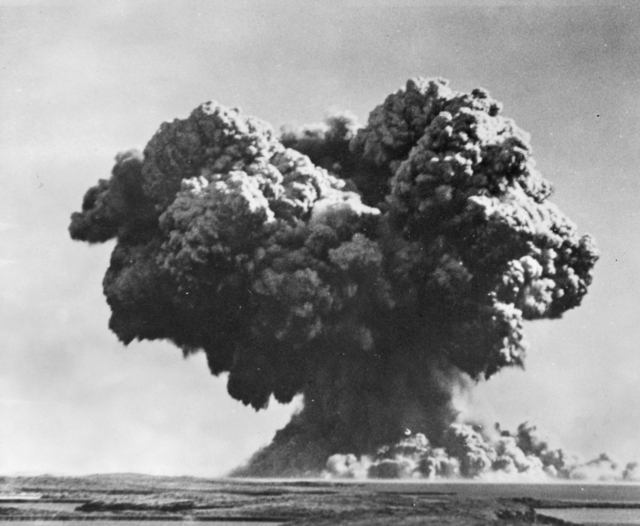
Explosion cloud from the Operation Hurricane atomic bomb test, October 3, 1952. Operation Hurricane was the first British nuclear test  (a plutonium implosion device) on 3 October 1952. This was detonated in the lagoon between the Montebello Islands, Western Australia.
---------------

Richard Tanter, Senior Research Associate at the Nautilus Institute, University of Melbourne, wrote an excellent article of May 27, 20133 which comments on an article by Tanya Ogilvie-White. Excellent because of its coverage rather than its conclusions. This article was originally published in the Australian Security Policy Institute (ASPI) Blog, The Strategist.

"No progress on extended nuclear deterrence in 2013 White Paper"

"Tanya Ogilvie-White’s reading of the 2013 Defence White Paper suggests significant changes in the role nuclear weapons play in Australian strategic policy, which give grounds for optimism. Yet all might not be as it seems.

She notes that the 2009 White Paper stated that ‘the best defence against WMD proliferation will continue to be found in security assurances, including US extended deterrence’, suggesting that US nuclear protection was intended to cover chemical and biological weapons threats, as well as nuclear ones. By contrast, she writes, the 2013 statement:
…specifically limits Australian reliance on US nuclear weapons to circumstances in which Australia is threatened with a nuclear attack: ‘we rely on the nuclear forces of the United States to deter nuclear attack on Australia.
Unfortunately, the 2009 White Paper said virtually the same thing, almost word for word. There wasn’t a change of policy, just the delinquent sloppiness and incoherence of the 2009 White Paper.

Another apparent shift she cites lies in the fact that this year’s White Paper omitted the 2009 White Paper justification for reliance on US extended nuclear deterrence on the basis that it “removed the need for Australia to consider more significant and expensive defence options.” This phrasing was a reminder that Australia had in the past actively pursued the nuclear weapons option, and could do so again.

This veiled threat of Australian nuclear breakout was made quite overt in February 2009 in a government submission by Ambassador Dennis Richardson to the Congressional Commission on the Strategic Policy of the United States:
Confidence that a nuclear attack on US allies would be met with a response-in-kind has assured very close US allies, like Australia, that they do not need to develop their own nuclear weapons, thus contributing to counter-proliferation efforts.
Ogilvie-White is right to note this year’s omission but that doesn’t amount to an abandonment of the government’s position. There’s no sign that the government has thoughts of withdrawing the Richardson statement and the omission from the 2013 White Paper can’t be taken as such. Allied nuclear prophylaxis is a perverse incentive for extended nuclear deterrence, and reminds us of ongoing fringe discussions of revisiting the nuclear option in Australia in recent years as well as advocates of nuclear breakout in Japan and South Korea.

Ogilvie-White suggests that the “precision” of the extended nuclear deterrence outline in the 2013 White Paper derives from the absence of the 2009 view that
“the viability of extended nuclear deterrence was dependent upon ‘stable’ nuclear deterrence remaining a feature of the international system.”
In fact, however, the 2013 White Paper says almost exactly that. Discussing the ‘Joint facilities’, it states that Pine Gap ‘underpins global strategic stability by providing ballistic missile early warning information to Australia and the United States’.

White Papers since 1987 have addressed the link between the hosting of the joint facilities and global nuclear balance. There has not been any change.

Lastly, Ogilvie-White is encouraged by the last words of the 2013 paragraph dedicated to extended nuclear deterrence, with Australia “strongly supporting ongoing efforts towards global nuclear disarmament”.

Once again, there’s little evidence, in the White Paper or elsewhere, to suggest that there’s any real change in Australian policy on nuclear weapons. The clearest example in the life of the Rudd-Gillard government was its pusillanimous response to the recommendations of the Australian-sponsored International Commission on Nuclear Non-proliferation and Disarmament.

A more recent—and in many ways more dismaying—example in March of this year was the way that Australia’s representatives at the Norwegian government-sponsored International Conference on Human Impact of Nuclear Weapons, at which 127 governments were represented, sat on their hands. ICAN Australia Campaign Director Tim Wright said
…the silence from the three Australian representatives (including the Director General, Australian Safeguards and Non-Proliferation Office) at the world’s first international forum on the humanitarian effects of nuclear weapons was notable. Australia made no statement or contribution to what is arguably the most significant advance in global governmental discussion of nuclear weapons for many years.
This might be contrasted with the vigorous and insightful support given by the New Zealand government.

While the evidence to hand means that I can’t agree with Ogilvie-White’s analysis, she does set out what should be ‘taken for granted’ expectations of our government, and provides a useful set of signposts. It might then be possible to go further and acknowledge the extraordinary combination of absurdity, obscenity and strategic foolishness involved in the claims by Australian governments over more than two decades to defend Australia with US nuclear weapons—a matter of ‘just in case‘.

Absurd because no plausible nuclear threat to Australia has ever been officially identified (other than that derived from hosting Pine Gap and North West Cape). Obscene because government rhetoric identifies nuclear weapons—anybody’s—as weapons of mass destruction, and yet proposes that nuclear genocide be used on our behalf. Strategically foolish, because despite decades of Australian pleading, the line ‘the continuing viability of extended nuclear deterrence under the Alliance’ averred by the 2013 White Paper is literally incredible: the United States has never made any public statement providing the assurance of nuclear protection successive governments proclaim to exist."

Richard Tanter is Senior Research Associate at the Nautilus Institute, University of Melbourne. Image courtesy of Wikimedia Commons.
 

October 17, 2013

US Debt Problems Have Only Just Begun


Last minute US political compromises have averted a US debt crisis this month, but the US and world are not yet out of the woods.

The US Debt virus concerns the squandering of America’s reputation as the main haven for prime investments, including many Australian investments. The sub-prime Global Financial Crisis (GFC) from 2008 was unintentional while this onrushing Debt Crisis is an intentional act by the kind of Americans the world is learning to hate.

Self-absorbed tea party right-wingers within Republican ranks, with little knowledge or care about genuine international responsibility, are looking out for No.1. The tea party movement http://en.wikipedia.org/wiki/Tea_Party_movement is a loose group of generally right-wing extremists who believe in guns, small Government, less many for the poor, lower taxes for the rich and isolationism – except for aggressive ventures abroad to make countries like Iraq and Afghanistan safe for western values, American-style http://en.wikipedia.org/wiki/Tea_Party_movement#Foreign_policy .

This Debt Crisis could impact Australia’s economy in ugly and disturbing ways such as rapidly increasing or lowering the value of our dollar – which could upset Australian exports – or hurting Australians in ways like the GFC. The US is suffering from a hung US Congress in terms of having a Republican majority in the US House of Representative. The House has been rejecting routine measures to raise the US debt ceiling with the specific aim of blocking Obama’s humanitarian health care programs. In Australia such political tactics would bring on a double dissolution election.

Even if compromise is reached on Friday (Australian time) or later this month the US Debt issue could recur every month until the US November 2014 mid-term elections http://en.wikipedia.org/wiki/Mid-term_election when all members of the US House of Representatives are up for re-election as are a third of US Senators. If the Republicans gain more seats in November 2014 the situation might be worse with Republican majorities in the House and Senate. This would leave Democrat President Obama bowing to a Republican agenda from November 2014 to November 2016.
The US Debt is actually mild by international standards in terms of US debt as a percentage of US GDP. On December 31, 2012 figures the latest figures US debt was 106% http://en.wikipedia.org/wiki/Debt_Countries The US fared better than some other major countries - with German debt at 142% of German GDP, France 182% and the UK 406%. Australia at 95% had a similar debt percentage to the US. Australia actually had a slightly higher debt per capita than the US.

The Obama Administration was legitimately voted in by the electorate in 2012. US debt levels have increased under US Democrat and Republican Administrations for many years. Obama having to inherit the largely Republican caused GFC and George W. Bush’s two wars has continued to render Obama a lame-duck President. Extremist tea party elements in Congress are intentionally sticking the knife into Obama and his Democrat Party. Their ultimate aim is to so discredit the Democrat centrists to improve the odds of a right-wing Republican President succeeding Obama in 2016.

The US for most of its history has been running more or less efficiently on a reasonable Democrat-Republican divide. It’s the politically fundamentalist tea party faction that is destabilising the US Government, US economy and unfortunately the world economy, including Australia. Many Americans are apologetic about this situation but that won’t stop another GFC. If American leaders want to be respected they have to prove it. American arrogance should not be excused just because America is the current top dog.
-
Pete